Subscribe:



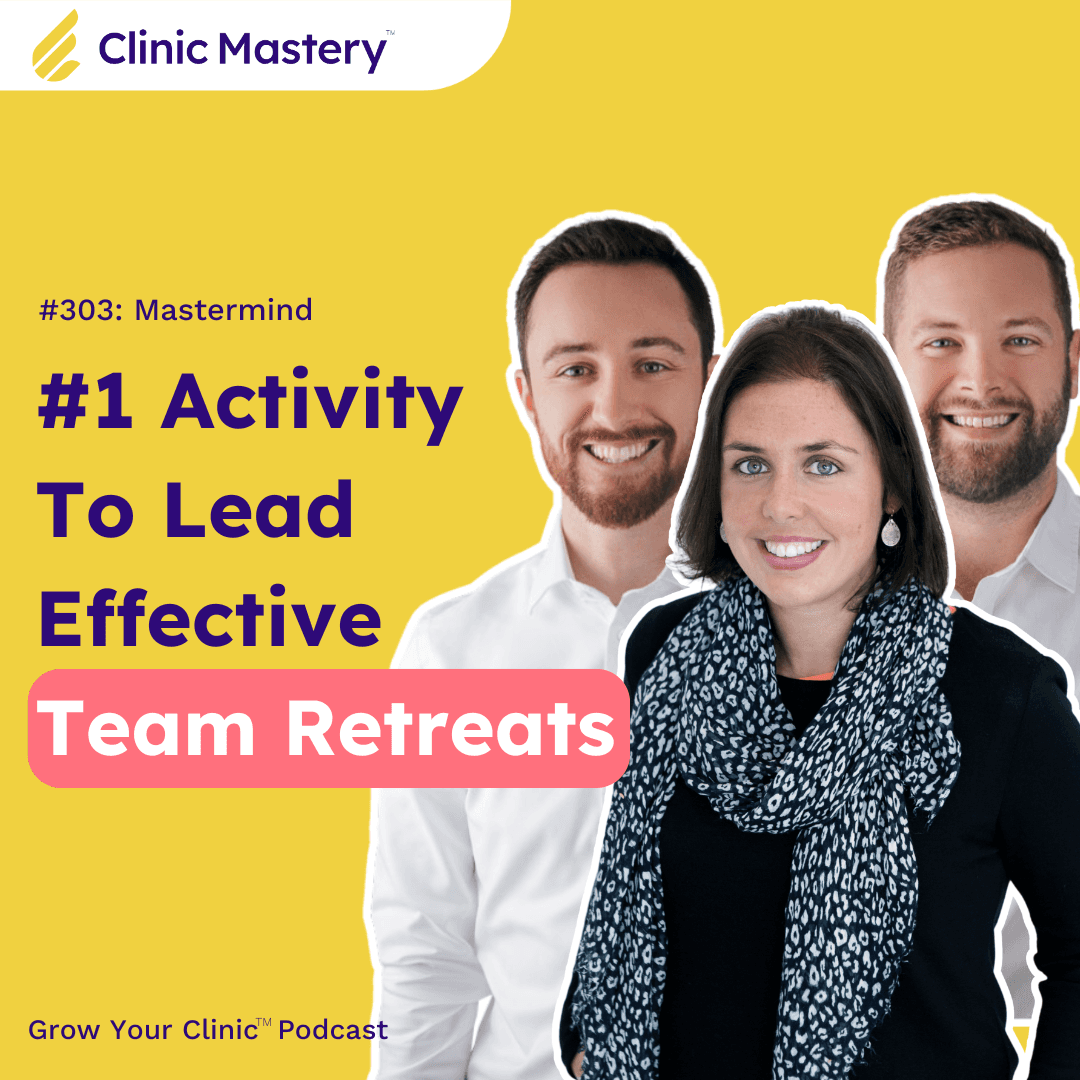
Imagine leaving your next team retreat with a crew that's more connected, more motivated, and pulling in the same direction - that's exactly what we're unpacking today.
We're joined by Bec Clare, director at PhysioWest, who shares how she plans retreats around a single focus word that shapes every activity and conversation. We unpack how to balance fun and productivity so your team actually connects - not just coexists - and why the informal moments between sessions are often where the real magic happens. You'll learn how to structure a retreat agenda that doesn't burn people out, how to bring in external facilitators to shift stuck dynamics, and how to run a post-retreat debrief that keeps the momentum alive long after everyone's back at their desks.
If your team days have felt a bit flat or forgettable, this episode gives you a practical playbook for retreats that actually move the needle on culture and performance.
In This Episode You'll Learn:
🌟 How to get a real return on investment from closing your clinic for a team day
🎯 The one-word method that keeps your entire retreat focused and purposeful
⚖️ Why cutting your run sheet in half leads to better outcomes
🤝 How play, competition and laughter build teams that actually stick together
🗣️ When to bring in an external facilitator to shift dynamics you can't move alone
📋 The post-retreat follow-up that turns a great day into lasting change
Need to systemise your clinic? Start your free trial of Allie! https://www.allieclinics.com/
Timestamps:
00:00:00 Episode Start
00:06:21 Is Closing the Clinic Really Worth It?
00:09:05 The Hidden Cost of a Disconnected Team
00:12:50 The One-Word Method That Changes Everything
00:18:01 What You Can Only Do at a Retreat
00:27:49 Inside the Run Sheet That Actually Worked
00:32:54 The Envelope Activity That Fills the Cup
00:42:20 How to Keep the Magic Going After You Leave
Discover more episodes!















Episode Transcript:
Ben Lynch: Here comes Bec. Oh, with the glasses. Hello. Hey, look at us. Look at us. Oh, look at Jacobrin.
Ben Lynch: Just fighting away that blue light. See the yellow tinge? Very nice. Very reflective. G'day, good people. Welcome to the Grow Your Clinic podcast by Clinic Mastery. Here's what's coming up inside of this episode. This episode will be right up your Allie if you're looking to improve team performance. We're diving into how investing in a team day can unlock growth. And trust me, you want to hear Bec's take on why you need to cut your run sheet in half to get the best outcomes. Plus stick around for when we discuss the number one thing you need to get right in the weeks that follow it to make it worthwhile. Some of those activities got people to really stretch outside their comfort zone, like singing Taylor Swift in public for 30 seconds.
Jack O'Brien: You want to think, what can I only do in a retreat context? And so much of that is personal connection. Here's a little recap of the run sheet if you're wondering exactly what we did.
Bec Clare: Often a team day might be a really great event for an extrovert in your team, but your introverts are the ones who will contribute likely between the sessions.
Jack O'Brien: Again, what don't we want to include in a retreat? We don't want to include just information dissemination. We know that a sense of competition can be really productive to create bonds. Try to include a little bit of physicality, a little bit of competition and a lot of laughter.
Ben Lynch: Before we dive in, today's episode is brought to you by AllieClinics.com. If you're the kind of clinic owner who loves to feel organized and stay ahead of the chaos, you'll love Allie. Think of it as your digital clone. It's the single source of truth for all your clinic's policies, systems, and training. Test it for free at AllieClinics.com. And, in other news, applications are now open to work with us one-on-one at Clinic Mastery. If you want support to grow your clinic and bring your vision to life, just email hello@clinicmastery.com with the subject line podcast and we'll line up a time to chat. All right, let's get into the episode. All right. It is episode 374. My name is Ben Lynch. I'm joined by Jack O'Brien, J-O-B, Jacobrin, goes by all things, and Bec Clare, director of PhysioWest here in Adelaide. It was great to hang with both of you. We got to spend a couple of days in Palm Cove for our team retreat, and then that flowed on to a client and member retreat. But Bec, what was a highlight for you in the sunny North?
Bec Clare: It's hard to get past perfect skies, um, and really like just clear blue, crisp weather and just hanging out together in the flesh. We got to have some really good banths, um, and just making memories. Loved it.
Ben Lynch: It was very good. J.I.B., what about you? What was a highlight of the team retreat and the theme of today's conversation?
Jack O'Brien: The moments in between the sessions I love, particularly the morning walks. So we'd go for a walk as a team every morning, grab a coffee afterwards, and just the ability to stroll and have conversations, something pretty powerful in that.
Ben Lynch: Yeah, absolutely. The music happens between the notes. Is that the Bono quote? That is the Bono quote, yes. That is the Bono quote. Well, we're going to dive into retreats or off-sites or team meetups, whatever you might term it as part of your annual operating rhythm. We'll get to that in a moment, but first, a couple of announcements. J.O.B., do you want to go for it?
Jack O'Brien: Well, speaking of retreats and in-person, we have a couple more in-person meetups. We had a Sydney meetup just a couple of weeks ago. Unbelievable event at the Gather Studio Space in collaboration with Health. We have upcoming in July, we have a clinic owner meetup, a Grow Your Clinic intensive on the Sunshine Coast in Queensland in July and Perth in August. So stay tuned to your socials. I'll be spamming you with ads and looking forward to having you joining us in the sunny coast in Perth and probably in Adelaide in September. So there you go, July, August, September, Queensland, Perth and Adelaide.
Ben Lynch: With the whole wave of AI, I'm seeing a lot of folks talking about how in-person events are just growing massively, whether that's a run club or you've got these sort of business types of meetups, whatever it may be, the emphasis on in-person connection seems to be getting a moment.
Jack O'Brien: And I will say, I go for a walk and grab a coffee occasionally here in Newcastle. I don't get out of home much. But when I do, we have started here in Newcastle, clinic owners getting coffee. It's a little bit like comedians in cars getting coffee, except I'm the comedian and the jokes aren't very funny. But if you're a Newcastle member, non-member, whatever profession, come and join us. Just send me an email, jack@clinicmastery.com if you're in Newcastle and we'll make that happen.
Bec Clare: Jack, the really interesting thing is you always know a Cliniko owner at a coffee shop because they're like this. So please tell me it's a little bit better than that.
Jack O'Brien: Yeah, you just peer over their shoulder and you can see Cliniko and you know that they're in the right place.
Ben Lynch: Well, let's get into the team retreat. We're going to share a little bit about the retreat that we just had, but maybe more broadly how we think about this specific event in your annual operating rhythm. If you consider things like your CPD calendar through to some of the events that you might host with partners, it's like, what are the in-person events that you have with your team quite notably throughout the course of your week, the month and the year? We've previously discussed that doing a team retreat to Bali or wherever is not going to be the silver bullet for your culture, but it's one element that can be an important element in bringing people together and doing a bit of a deep dive, especially if you're remote or you're a multi-site clinic where people don't get to interface or interact with one another, it's a great way to do it. But I wanted to start with how you go about thinking of bringing the team together in person for a half day, a day, maybe it's multi-day, depending on your clinic, and making the most of that Bec. You've done this a number of times. We've run a team retreat for as long as I can remember, and it's especially important for us as a fully remote team. But how do you think about the investment, whether that's shutting down the clinic for a period of time or getting people to come to a certain venue and investing in that, all the expenses, costs, investments that go with it?
Bec Clare: It's something that Grant and I as business owners talk about a lot because I sort of swing more into the culture Grant obviously loves. like developing a culture. Yes. I'm not going to completely throw him under the bus here, but he struggles with the notion of we're going to close the clinic. We're not going to be open to care for people. Um, there's going to be ultimately a loss in revenue. Right. And I guess it's about factoring it into our budget and what we call our rolling breakeven to go, okay, there's some days that we're actually not going to be available to consult. How I look at it though is over time as we've developed our culture days is I can see almost an immediate return on investment by the way that our team then show up to those events but then show up the next day. To the point now that we actually get the timing of our team days and the rhythm, we typically see where there's a little bit of a lull in energy. So we put the team day in and around that time just to pick the group back up again. Because naturally there are ebbs and flows, whether it be weather, school holidays, things that are happening and seasonal. So we're really wanting to capitalize on that and you can feel the lift and that then has an immediate return on investment. Can I put a dollar figure on it? No, but you can feel it. And a lot of, and I've been talking to a lot of clinic owners lately, it's sort of the spidey senses is what I'm now calling it. That leadership's the sense where you can feel that your team is ready to, to dig in, to dig deep and to make a really meaningful impact. And sometimes they need a bit of a G up.
Ben Lynch: So do you plan a year in advance, like we're going to do these meetups on these dates and where are you at at the moment with how many you do across a year?
Bec Clare: Yeah, so the year is planned out because it's challenging to get everyone or as many people as possible to attend Retreat. And I've sort of come to the point where now I'm realistic about getting how many people I can get to one of these events. So in and around November, December, we release the calendar for the year ahead. They typically fall in the same types of places. And we've landed pretty nicely now at four whole days together.
Ben Lynch: Okay, nice. Well, J.O.B, in a similar vein, how do you think about the investment in bringing the team together in person for what Bec calls a team day, maybe you're doing a retreat, and the subsequent months and the changes to how the team show up and perform their role?
Jack O'Brien: Well, I mean, there's a couple of ways to think about it from a really pragmatic return on investment perspective. You can think, well, what are we trying to resist or get away from? You know, Ben, you often talk about anti-values and sometimes thinking about the inverse can point us in the right direction. Pat Lencioni's work inspires me on a lot of these fronts and he talks about one of the key enemies of team performance is artificial harmony. Our goal as clinic leaders is to resist at all costs this fake, pretentious, pretending we're all just assuming that everything's okay. And so what is the return on a team day, culture day, alignment day, whatever we call it? Well, the return is often speed. Yeah, it's high speed, low drag. And so often one of the biggest frustrations for clinic owners, energy leaks, but also dollar leaks, is this cultural drag where you're forever handling the politics of the office or the infighting and the tension and this unproductive, inefficient environment. culture and retreats specifically address that so we can be low drag, high speed.
Ben Lynch: One of the things we were chatting about while we were away, Jack, was when you look at various meetings in your operating rhythm, there might be a case where actually getting in person just accelerates what otherwise takes a few months. If we have this standing meeting that is an hour, once a fortnight, and it drags out over three to four months. Could we otherwise just get in a room for a half a day or a full day? And I think we often see clinic owners would choose their leadership team to start this with if they're doing it for the very first time. Maybe there's two or three or five team members that are part of a leadership team, and then they might look to a whole team type event because you want to get a few reps in. The first few are always clunky as you figure it out. I think we've all made the mistake of trying to cram way too much into the run sheet. And we'll talk to that in a moment. And you actually realize to your point, Jack, of like the music happens between the notes. You actually need a lot of time and space between structured sessions for some of the unstructured organic things to come out of it, the connection, the conversations, et cetera. One of the things that we did subtly different this time around in this team retreat for us was we looked at What does success look like following the retreat? Specifically, one day after, one week after, one month after, one quarter after, and one year after? And just, we workshopped it around the leadership team and said, what would be some of the signs, signals that we could say, yeah, that's attributable to the retreat and the conversations and the structure of that? To that point of like, what are you trying to affect with? Had a number of clinic owners over time go into these, Bec, and I'm interested in some of the themes and topics you found most useful. They've gone into these types of events where maybe they are focusing on the client journey, or they're focusing on a specific part of the client journey, like how we treat our new clients, or they're focusing on clinical excellence and it's more along training, mentoring, supervision, that side of things. And so then they might be able to distinguish, okay, well, if this team day is super effective, we should see these changes in the subsequent weeks and months. What are some of the topics that you've found yourself maybe anchoring to or maybe it's more specifically around outcomes that you found yourself anchoring to off the back of the retreat?
Bec Clare: Interesting one. It's evolved over time and now on our run sheet for a team day or a team retreat, we actually have just the word outcome and it's one word. So we've tried to really simplify and distil down what is the one word that we can anchor back to. We use that as our filter for then setting what sort of activities we'd like to do. We in fact run our first exercises. This is our theme for today. Our word is blah. What does that mean for you? So more recently it's been connection. Um, it's been welcome was one of them. Like how can we make new team members feel welcome? How can we make new clients feel welcome? How can we be welcoming back returning clients and how can we create that feel? And it's been really important for us as a leadership group to connect with that word. And then for our team to also layer in their experience with that word. What I have really enjoyed about our team days and retreats more recently has been that we pick that word and we sort of frame up our exercises, but we're not entirely sure of where we're going to end up. And having our team now sort of drive that actually has this really nice collective buy-in. The control freak in me freaks out every time because I'm not sure where we're going to land, but I have enough trust in my team and the culture that we've created to land somewhere pretty special.
Ben Lynch: Do you mean you're setting the intention, that one focus, that one word, and then the leadership team is actually pulling together the run sheet?
Bec Clare: Yeah, absolutely. Together we pull together the run sheet. Okay. Yeah. So dividing up the day so that everyone has a different take on it. It's also, I get to then enjoy the retreat and that's also what I'd love to chat to you both about today is how did you see the retreat as leaders? Yeah.
Ben Lynch: Yeah.
Bec Clare: You see it through a different lens than team members. Totally. And so I get to run team retreats and team days for my own team, but to then be a team member in a space is also really special. And I think trying to share your run sheet with your team and your leaders allows you to also be part of the team on those days, which I've just really enjoyed being able to do.
Ben Lynch: It is good, isn't it, when you get to be fully participating in the day? And that's where we've often talked about getting an external facilitator can really help, say, clinic owners immerse themselves as part of the team because you are often thinking of a lot of logistics like, are we running on time? Is morning tea coming out at the right time? Have we got enough coffee and tea set aside? There's all those logistics and mechanics that you have to also be aware of. Or you've got someone else and that somewhat distracts them from maybe fully immersing themselves and being present in what's going on.
Bec Clare: starting point, having someone help you be timekeeper for the day, really helpful. Someone help organize lunch. You don't need to do it all on your own. And I think that the team actually want to be part of this with you. And I think that's what creates the magic of a team day. That's what we're here as a team together, share that experience with others and have some others take some ownership of what the day looks like.
Ben Lynch: I'm interested in how you arrive at the one word, the one focus. And J-O-B, I think you're alluding to that in when you talked about Pat Lencioni's stuff of the trust and the connection and the artificial harmony. I assume you're referring to the five dysfunctions of a team book and that base layer being about trust which is facilitated by connection and vulnerability typically, and then you can work your way up. Just expand on what's your process? How do you navigate the conversation with the leadership team to arrive at, this is the one word, this is the one focus for our team retreat?
Bec Clare: Sometimes it's a podcast I've listened to. Sometimes it's a book that I've read. Sometimes it's a conversation with either one of you. Often it comes down to what's on our 120 day plan. Yeah, we've got our year well mapped out. We've got a roadmap in front of us. And I think so often we try and create something really new and shiny and fancy because we think we need something like that for our team. We've really, we've set out the journey ahead and it's really important to keep coming back and revisiting those plans and working out whether that sort of fits with where we want to go in this next phase. So I guess it's, yeah, what am I seeing and hearing out in the landscape? What has inspired me lately that I can talk to from a point of inspiration grounded in what is our existing plan?
Ben Lynch: J.O.B, so often we've prioritized connection as like the main theme through all the retreats or meetups, because I guess broadly the thinking has been, well, if we don't nail that piece, then in the subsequent weeks and months where the rubber actually hits the road, it's going to be less effective. Is that how you'd see it or how would you summarize, especially for clinic owners that think, okay, I'm interested in doing this or I've tried, it hasn't really worked. How should I be thoughtful about what the intentional focus is for this team day so that we get some of the progress and results that we ultimately want in the weeks that follow?
Jack O'Brien: As a clinic owner, you want to think, what can I only do in a retreat context? And so much of that is personal connection. Again, what don't we want to include in a retreat? We don't want to include just information dissemination. It's like, if it could have been an email, it probably should have been a Slack message. So we're not there just to share and disseminate information. And then when it comes to like, quote, doing work, well, it probably depends on how the rest of your year looks and flows. If your meetings, you know, in general are really productive and flow really nicely, then we don't necessarily have to do work at a team day or a retreat. But if through the rest of the year, maybe your meetings are a little bit flexible and there's not a lot of intensity, sometimes a retreat is a great place to make a real gear shift in intensity and get stuff done. To your point, we can get stuff done in four hours, what otherwise might have taken four months. So, that's where I think that what can only happen in a retreat context is that human connection, that rubbing shoulders and clinking drinks and having some quality time together and maybe, it's plus or minus, getting some deep work like a hackathon in progress.
Ben Lynch: How do you think we went about that? What were some of the elements just notably recently off the back of ours, Joby, that are evidence of doing that, that folks tuning in could take some inspiration from, not to say that you need to do it this way, but just to give some practical guidance on how we went about doing that.
Jack O'Brien: Yeah. There's a lot of social and connection time at our retreats, and some may say that's dead or filler time, but for us, that's really deliberate and intentional. We make a real point of like, what are the types of drinks that will be available and who's paying for them? And, spoiler alert, we pay for them. It's on our tab. The meals that are scheduled are in environments where it's really conducive to conversation. We make sure seating arrangements are shuffled around. We make sure coffee is available. And then, if there's any activities to be done, we want them to not just be another, you know, something that we've grabbed off ChatGPT, but something that's really productive towards relationship And now when it comes to bonding, human bonds, there's people smarter than me that will speak about it. But we know that a sense of competition can be really productive to create bonds. We know that suffering or some physical challenge can be really bonding. And we know that laughing is really bonding. And so, we can maybe go into some of the specifics of our retreat events, but we tried to include a little bit of physicality, a little bit of competition and a lot of laughter. And these go such a long way to creating memories. You want to be able to say, for instance, a couple of years ago, we did a surfing lesson as a team. Folks who were there would remember it as, oh, that's the retreat where we did the surf lesson, or that's the retreat where we had the private chef, or that's the retreat where we did the beach Olympics. So there's something that anchors that experience. It's not just, oh, yeah, I think the boss paid for cocktails. That's not very memorable. Let's make it a moment that is very memorable with a multiplier. at a milestone. What we did at our retreat this year was specifically, we structured an amazing race scavenger hunt type thing. It was really deliberate around some key culture or language elements of our business. We were really intentional on how we allocated the teams, make sure the right people are in the right place. It was quite physical. It was a good laugh. Ultimately, a team had to come out on top. I can't quite remember if you folks can remember whose team that was. No, we don't remember at all. Oh, you don't remember. So it must not have been either of your teams. It must have been – maybe it was my team. Anyway, it was such a wonderful moment to connect, laugh, get physical and have a bit of competitive fun.
Bec Clare: Ben, I actually – I went home and described the retreat to Grant.
Ben Lynch: Yeah.
Bec Clare: And he came back with one line and he said, a child's work is play. And by that what he meant was that children learn best and they take the seriousness out of a situation by playing and learning and developing their skills and how important it is for us as adults sometimes to play. Yes. And so that was his, he put that reflection back on me. Really great opportunity to have created connection, to have taken away some of the seriousness and often what we do and how we talk about things and just to let our spirits have that moment.
Jack O'Brien: Bec, I'm curious with your team. So here's the thing, right? Adults are often resistant to play. for one reason or another, we think, oh, we have to be professional or that's too childish or I'm too proud. Maybe we wouldn't say those words, but that's what we mean. Have you ever had to overcome some of that resistance in your team to embrace a little bit of foolishness?
Bec Clare: Goodness, yes. They get equally scared and love team Zumba sessions. I have team members who are like, I'm not doing Zumba. So in order to combat that, we, we took the seriousness out of it. I mean, how can Zumba be serious anyway? But we took even more seriousness out of it and we made everyone, um, dress up in like onesies. So like everyone looked silly, no matter how good a dancer you were. Um, but we just, we really go to that play element. It stretches a number of our team, I can tell you, but I all come away smiling. And like this infectious smile and we remember it. Chris was wearing the giraffe onesie and Spencer was in this and there are life long stories that go into the fabric of your clinic or your business that are talked about for years.
Ben Lynch: And I think, you know, a skeptical listener tuning in is going to go, well, that sounds like, you know, table tennis and beanbags and kind of the fluff of team and culture. And here's a very practical insight directly after, if you've been able to achieve some of these objectives with your run sheet and your focus. The connection that is created means the conversations that happen are much more free flowing in the days and weeks that are after it. It's like you're able to pick up from that energy and that vibe. And I find the collaboration, the iteration, J.O.B, you spoke to like the speed piece as well. It just is a different environment, a different vibe for the team operating post a retreat, provided you've done it well or culture day or whatever you term it. So, and it's not a silver bullet and we've certainly made mistakes ourselves and we've seen other clinic owners do it too, where they do their first one or their first one in a long time. Cause it's like, I kind of used to do that, but I haven't done it. And it is a little bit awkward or it's a little bit challenging and you kind of blowing out the cobwebs and it's like, go back to the well. Figure out some of the things that you would do differently. And I think a good debriefing process, a survey process afterwards from your team is helpful for getting some of those insights. To then look at how do you change it up. Uh, yeah.
Bec Clare: Sarah from the People plugin shared a really great analogy with us and she uses the analogy of the first pancake. So your first team day is going to be a little bit like your first pancake. It's going to be perhaps a little bit burnt around the edges, a bit soggy in the middle and not the greatest pancake. But over time, each pancake gets better and better. And so with every team day, do we still get it right all the time? No, I'd say. And it's in that debrief and it's what's on the next run sheet. And how do we make that pancake just taste delicious next time?
Jack O'Brien: Well, one of the other things that we did for ours is we combined, it wasn't just all play, we got a bit of work done and we did like a real intensive deep dive. We went Claude maxing, but it was like a hackathon in a way. And it was almost that get work done that doesn't get done in the usual day-to-day grind. It's a little bit outside business as usual scope. And it was off the back of essentially 24, 36 hours of strong relational connection. And it allowed us to really get the collaborative juices flowing and ultimately really create extraordinary value for our members ultimately is where it will flow down to. But a great deal of satisfaction for our team, got to do something a little bit out of the ordinary, got to progress our skill set and learn, embrace something a little bit hard and like stretch the neurons a little bit. It was a wonderful combination for our team of fun, light-heartedness, but not light-weightedness. And that's a distinction that I've picked up from some of my friends around Good Life at INC is we want to be light-hearted, but not light-weight. We're heavyweights. We're getting proper work done and creating demonstrable value, but we're going to be light-hearted as we do it.
Ben Lynch: So here's a little recap of the run sheet. If you're wondering exactly what we did, we met on the Friday afternoon about two o'clock and have some welcome drinks and some socializing. There's like a welcome greeting to the team, but very organic for a couple of hours, two hours of connection and conversation. And then we had an hour in the meeting room where we got to reflect on some of the wins that we've had. There was a real emphasis in this retreat around. celebration and acknowledgement, acknowledgement of other people in the work and the contribution that they make around the team. And then that followed into a really nice group dinner. I think, J.O.B, as you spoke to, we try and get really long tables. People are bouncing up and down the tables, chatting with different people. And it's a really fun time to share a meal, break bread, as you said. Then on the Saturday morning, we got into teams, and this was really fun. In fact, we got into the teams on the Friday afternoon, but on Saturday, we did the scavenger hunt up and down the main street in Palm Cove, and we weaved in a number of little tip of the hats to team members throughout some of the activities that they needed to do for a couple of hours and then come back in. Because we got people to take photos and videos, we then got to have a bit of a laugh. And part of also getting the photos and videos is there's little artifacts and reminders that we'll then be able to use and resurface in the coming weeks and months as people look back and have a giggle. Some of those activities got people to really stretch outside their comfort zone, like singing Taylor Swift in public for 30 seconds. But then we also weaved in some of our core values and being able to find examples of that down the main street. We then flowed into some lunch and then we had a two-hour session in the afternoon. Now we debated what we should debate. And this was really fun. So we had a two-hour session. where we had four teams and they were given a topic to debate. And the debate format is a really fun way to get people collaborating. uh, to think laterally and critically. And we said, no, chatGPT, no Claude, you got to use your actual intelligence to figure this out, which also was quite good for, for folks to, to co-lab. And initially we were thinking, let's use some problems, challenges that we have internally right now that we need to solve. And that would have been more the work angle, right, JRB, but we decided actually after, um, some inspiration from Shane Bennett. We could still have fun. We could still add some rigor around the debate and the collaboration of different team members who wouldn't ordinarily work together in these teams. We could still achieve some of the objectives, but just de-emphasize sort of what the topic was or change the topic to something more fun. So we debated cats versus dogs. and tea versus coffee. It was, to your point, Jack, it was light-hearted, but it was very, very cool to see the lengths people went to in coming up with their arguments.
Bec Clare: I believe it was light-hearted unless you were on the end of Jack's roast.
Ben Lynch: Well, that's true. Jack got himself into hot water. Anyway.
Jack O'Brien: Well, roasting is the highest form of flattery. Roasting is my love language.
Bec Clare: Take that now, Jack. Yes. It was epic. It was great.
Ben Lynch: And then the dinner, we had a really nice dinner at Nunu's there in Palm Cove. And then on the Sunday morning, as you said, Jack, we, we got to focus on all things AI and level up collectively. There are some power users in our team on Claude and are able to really a rising tide lifts all boats, bring everyone up to speed. And we actually left creating some things, which is really terrific. That's kind of the flow of, of our run sheet. There was a core focus on connection. celebration and clarity. Clarity about where we're going and the AI piece played a key role in that. So it was a really fun, fun time. And I think as we all reflected afterwards, there was a good balance and it was the right probably more weighted towards the fun and connection side this one than previous ones. But that was needed, I think, with all the great things that have happened over the last 12 months to have that balance and focus. Joby, you had some points?
Ben Lynch: Well, you missed a key piece. Oh! I was giving the high level. What?
Jack O'Brien: I thought you'd- Which one? Being the words guy, the words of affirmation, well, I'm the words of affirmation guy, so I will remember. Of course. There you go. I've laid it out for you. Please.
Ben Lynch: Of course. Oh, yes. We did this really nice activity through … It was a thread from the Friday through to the Sunday where each team member had a big A4 envelope. They wrote their name on it. And over the course of the weekend, other team members had the opportunity to take a moment and write an acknowledgement on a piece of paper and put that into the envelope of the team member that they're writing the acknowledgement for. This was about kind of filling the cup. of those team members by getting these really beautifully handwritten, thoughtful acknowledgements. So we would allow five to 10 minutes at various points in the run sheet to say, hey, everyone, we're going to put some music on. This is your opportunity to acknowledge someone in the room here and put it in their envelope. And that was something each team member could essentially walk away with at the end of the retreat. Now we're going to send them to the team because people left at different times, but they could literally walk away having their cup filled with a bunch of acknowledgments, which was really nice.
Jack O'Brien: And I really like that touch and I've been deliberate about posting it out a couple of weeks after the fact to really essentially draw out some of those feelings of nostalgia and warm and fuzzies after the fact. The retreat felt wonderful at the time and to be able to revisit that when the postee arrives in two or three weeks afterwards will really reinforce some of those memories and experiences.
Ben Lynch: And creating a Google Photos album with all the great evidence of the fun times that we had is something that we often do as well. We encourage everyone to take as many pictures as they can and pop it up there, which we often look back on fondly over time. So, Bec, as you look to your next Meetup Culture Day, have you got a theme emerging for what needs to happen at PhysioWest?
Bec Clare: Yes, I think we're going to lean to connection. Um, I think that's our next, next focus point as we head into sort of that surge towards the end of the year. I think we've got a really great connection. You can feel it now. And I think it's time to really emphasize that and be in the same room together and really ground that. Um, and to your point, Jack, I think it'll be a combination of light-hearted and heavyweight in that. this is our moment to create those moments of fun together and have the conversations that can't necessarily happen over Slack or even, you know, as therapists walk between each other or walk by each other between consults, just to have that grounding moment and that time together to let things unfold, then we can gain our momentum after the fact.
Jack O'Brien: I really like that Bec and here's what I see a lot of clinic owners struggle with is maybe the first retreat is a little bit clunky and then the second, third and fourth retreat or culture day is somewhat standardized and I'll say relatively simple to pull off. We take off some vulnerability work, maybe we work on some robust conflict, trust building and then how many clinic owners come to us and say, well, then what? Like, where to from here? We've got the awkwardness out of the way. We've ticked off some of the fundamentals, the expected basics. Where to next? And I remember I led a culture day for a team here in Newcastle not that long ago, and it was a similar conversation. I'd done one for them, you know, 12, 18 months prior. The team had continued to grow and develop and evolve. And it's where to from here? And so it was deepening those connection layers and really pressing in and creating bonding, not just that we shared a laugh, but we bonded. And then also progressing through that Lencioni pyramid of functional teams. It's one thing to establish vulnerability, trust, and to be able to have conflict. But ultimately, it must get to a point of commitment and accountability towards results. And so having a retreat around accountability kind of sounds a little bit counterproductive or maybe not as exciting. But when you are able to lean into levelling one another up and holding each other to higher standard, it feels like you're on not just the family that tolerates the weird uncle and auntie at Christmas, but a team that expects nothing less than high performance from themselves and therefore from each other. So much of that is in the prep, right?
Ben Lynch: Isn't it, Jack, in terms of how you do it? You might say accountability is going to be the key thing because plenty of people are dropping the ball on things. It's then in the preparation of how you do that, that's not as aggressive or top down, that people come to that realization because you've created a really good run sheet to facilitate it. And in the preparation, not only of the run sheet, but maybe it's in the meetings in the lead up to it or the connections in the lead up to it. And definitely post. That was a good conversation I had with Andrew Zachariah for this. Our team retreat recently is like all well and good to have a fantastic couple of days together. But if nothing changes off the back of it, then it's kind of lost and a lost opportunity. And so that's where kind of shooting through the goal was really helpful in going, well, what does success look like in a year? And then working backwards from there to the quarter, to the month, to the week, to the day. We even went through the process of what do we want the team to think, feel, say, and do at each of those time points? And often you're just kind of making things up going, wouldn't it be great if people said, this is the most incredible experience I've had in my life. Now you can go to that nth degree and it maybe depends on your investment and what you're trying to achieve. But I would go there, like, what is the feedback people are messaging you about, calling you about? You may not be able to achieve it fully, but we certainly started there with that framework to work backwards to, well, what would the run sheet need to do in order to achieve that outcome? We had plenty of fun.
Jack O'Brien: Yeah, I really liked that. One of the other things that stood out was there was a key, there was a few, but there was one key framing bit of content that stood out to me and that was Andrew Zachariah's, he used a little TikTok video, maybe it was YouTube, whatever it was, on Sunday morning and it was this thought-provoking, almost a clip from a TED Talk. I can't even remember who the speaker was, if you guys can recall. Yeah, it was Bezos on Wandering. Right. It was Jeff Bezos. That's right. And this notion of like, we know where we are, we know where we're going, but we don't know exactly how we're going to get there. And it's okay to wander. It's okay to explore different trails and maybe hit a few roadblocks. And it's the wandering that builds connection and satisfies our curiosity. So the point for listeners really is that I wonder if there's a key bit of content a YouTube clip or a book or a podcast that can really frame up and crystallize the collective mindset that we want our team to have along the way. It quickly unites our thought processes.
Ben Lynch: It's a really great piece of advice because you said it earlier, Jack, of there are plenty of people that can say it and have said it way better than us. How many times have we used a Simon Sinek, a Brené Brown, a Kim Scott, someone of that order when it comes to team-related things? And often in that vein of making mistakes, of adding too much on the run sheet, like every minute's accounted for, and clinic owners end up stressed with the amount they've got to prepare for the day or the couple of days. that actually doing less is better if it's really focused. And I've seen a number of clinics just pick a video like that and that sets the theme, that is the through line for the whole time that they're with their team. So that absolutely can be a great anchor point.
Jack O'Brien: Yeah, it can be content. It can also be having external facilitators or presenters. I know I've facilitated personally countless culture days and so much of the work goes in beforehand collaborating with the clinic owner. What have you been trying to say that I can reinforce or say a different way or what's a relationship dynamic in the room that I can really help to leverage and lean on? Sometimes we can get done with external presenters, what we've been struggling to get over the line internally and it's an untapped resource for clinic owners to think outside, get a guest in. Maybe it's a guest, you know, CPD presenter, I guess motivational type leadership influence. Maybe it's your coach or someone in the clinic mastery team that there's so much value and you're like, oh yeah, it's another investment. How about, how much will it reduce the drag and increase the speed and productivity afterwards?
Ben Lynch: Try measuring that.
Ben Lynch: Taking that quote from Bono, the music happens in between the notes. Let's play this out. The retreat, the culture day is the note. What happens in between the notes, you do yours quarterly. What are some of the things that you look to install or modify in between those dates so that you do get the traction, so that it's not just a flash in the pan. We did that day, it was fantastic, but it's kind of back to business as usual.
Bec Clare: We try and if we've got some projects that we're working on at the team day or the retreat, we try and set some milestones and we have team members take some accountability for ensuring those milestones to essentially champion those projects. We get to see who our leaders are in the room and what, and really all of the activities have a slightly different cadence. They have a slightly different genius zone. So we can also have some of the quieter team members who may not be the loudest in the room at team retreat or our team day to be able to contribute between the notes. And I think that that's really the environment we want to create for our team as well, is Often, a team day might be a really great event for an extrovert in your team, but your introverts are the ones who will contribute likely between the sessions, and how can we really create that environment for them? I think that's where we've really leant to more recently.
Jack O'Brien: Bec, you just said something I'd love you to clarify. You said some of the activities are where we get to see who the leaders are in our team. Shouldn't you already know who the leaders are in your team?
Bec Clare: Not always.
Jack O'Brien: Right.
Bec Clare: Say more. We do. But this is a great opportunity for someone to show us something we haven't been able to see. In the day to day when we're doing what we do, and we're maybe passing ships in the night through the corridor, we might not be able to see these little threads that are starting to appear. And it's a really, I'm often surprised at a team day and I love it. So what do you do with that? I love being able to see the team dynamics and someone put up their hand to do something.
Jack O'Brien: What do you do afterwards? Is there any intentional follow-up? If you've noticed something maybe that you weren't expecting, what does that look like?
Bec Clare: Yeah. So I love to send, whether it be a handwritten note or a little slack to someone to say that I really saw them and I loved what they contributed to the group. If someone else saw it, we encourage that to also happen. So it's that between the notes and really just, we take the time to celebrate. the things that we want to see in terms of culture.
Ben Lynch: The theme for us in the AI side of things is quite a meta theme really for the community as well is how are we using it to accelerate some of our capabilities? How are we using it to add more value to the people that we work with? And we knew that going into it, and that was key for it being on the Sunday morning. And then we already knew sort of intentionally. the adoption, the use, the competency of the team post-retreat in AI is like a good measure. So I guess in a sense, you're going into it knowing, well, if we're focusing on the new client experience or the client journey overall, or our CPD and clinical excellence, whatever the case may be, hopefully you're also then changing what happens afterwards, whether it's the frequency, duration, structural format of those meetings or team trainings post, or you're getting external facilitation. Who leads those things? Hopefully they're already thought about in the lead up to it. definitely actioned on the back end. There needs to be some evidence that this is flowing through and from the retreat or culture day. Well, we've covered a lot of really good ground. There's so many different activities that we've used over time. For members that are tuning in, we have an abundance of examples and specific run sheets that you can just plug in place. You don't even need to do the brain damage to figure out what you're going to do. You can just use what someone else has already done, and that's in the learning portal. So go and check that out. That also includes instructions for different activities, some of which we've covered on previous episodes of the podcast around whether it's using the cards I've got over here from the Imperfects, the vulnerability cards, the hero hardship highlight, the timelines, the things that create some of the vulnerability and connection for your team to have the accountability to results, as you pointed out, Jack. So there's an abundance of resources of how to do it. in the learning portal for members. And if you've done a few before, how could you level it up? That's the real key for your next one. Any closing remarks from you, Bec, and then over to you, Jerby, about what's super important for clinic owners in installing and improving their team culture days?
Bec Clare: With your run sheet? Craft your run sheet? and then get whether it be your red pen or your scissors or your highlighter out and cut half. Enjoy the time.
Ben Lynch: It's so true. Great point.
Jack O'Brien: JOB. I mean, key action, get it in the diary. It's the end of financial year. Why don't you map out the next financial year's worth of retreats? Get it in the diary.
Ben Lynch: Perfect. These are such a worthy investment in your annual operating rhythm. Folks, you can head over to clinicmastery.com/podcast for the show notes for this episode. Members, jump into the learning portal and use the incredible resources at your fingertips. And we'll look forward to catching up on the next episode very soon. Bye-bye.