Subscribe:



What if your clinic doesn’t have a culture problem - but a standards problem? Culture isn’t what you preach. It’s what you permit.
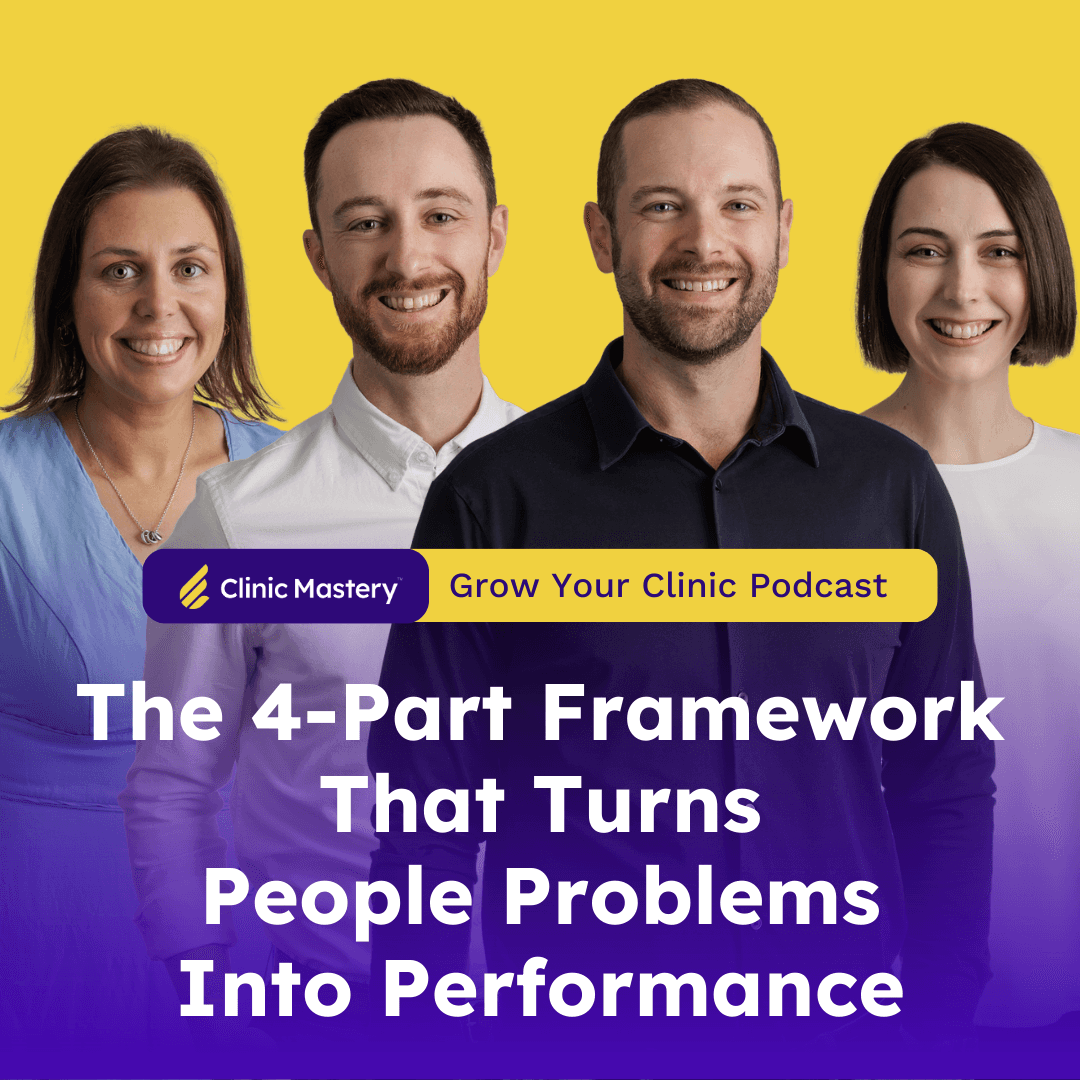
In this episode of the Grow Your Clinic podcast, we sit down with Sara Siami - founder of The People Plugin - to unpack what culture really means inside a clinic. Sara challenges the idea that culture is about perks or personality, and reframes it as the standards of behaviour and performance you accept and tolerate. We break down her four-part framework for turning people problems into performance (outputs, outcomes, behaviours and attitudes), the difference between hitting numbers and living values, and why HR should be a proactive investment - not a last-minute rescue plan. Sara also shares how to run performance reviews that actually build trust (using the SCARF model), create accountability without fear, and address issues early before they become expensive mistakes.
If you want a stronger team, clearer standards, and a culture that drives performance, this episode is your practical playbook for building a clinic that performs at every level.
Resources:
You can find Sara Siami at https://www.thepeopleplugin.com/ and book in with her at https://meetings.hubspot.com/sara-siami
Need to systemise your clinic? Start your free trial of Allie!
https://www.allieclinics.com/
In This Episode You'll Learn:
🔍 The role of HR in fostering a positive work environment
🚀 How to proactively address team performance issues BEFORE they escalate
🌟 How to define and improve your clinic's culture
📊 The importance of setting clear standards for performance
🤔 Effective strategies for conducting performance reviews
💬 Tips for giving and receiving feedback in a constructive way
Timestamps:
00:00:00 Coming Up Inside of This Episode
00:05:20 Defining Clinic Culture with Sara Siami
00:15:09 Engagement measurement and surveys
00:18:20 Organisational accountability insights
00:21:06 Celebrating great performance
00:25:37 SCARF model for performance reviews
00:30:44 360 reviews for clinic owners
00:38:02 Truth handling in clinic management
00:47:12 Proactive HR engagement strategies
Discover more episodes!


























Episode Transcript:
Ben Lynch: G'day, good people. Welcome to the Grow Your Clinic podcast by Clinic Mastery. Here's what's coming up inside of this episode. This episode will be right up your Allie if you want your team to step up and own their performance. We're diving into a four-part framework, and trust me, you'll want to hear Sarah's take on how to decrease the feeling of threat when doing team reviews. Plus stick around for when we discuss what culture actually means and how to practically improve it. HR is an afterthought. It only happens when there's a real problem.
Sara Siami: Define culture in one word.
Bec Clare: I was like, oh, that is an amazing question. HR is often seen as this thing that comes in and mops things up at the end. Well, that's not setting standards. That's not setting culture. You're fixing.
Sara Siami: Oh, they're really performing. Like, yeah, their behaviour's not that great. And I'm like, well, they're not performing then, are they?
Jack O'Brien: Anonymous feedback. Yay or nay?
Bec Clare: Yes. But also, if you feel like you're travelling pretty well, engage HR because it's going to keep you on this path as well towards those standards.
Sara Siami: And there's no harm in saying to people, like, oh, hey, I'm not really sure how this is going to go, so let's go through it together.
Jack O'Brien: There's so much to this about truth handling. You can't handle the truth!
Ben Lynch: Before we dive in, today's episode is brought to you by AllieClinics.com. If you're the kind of clinic owner who loves to feel organized and stay ahead of the chaos, you'll love Allie. Think of it as your digital clone. It's the single source of truth for all your clinic's policies, systems, and training. Test it for free at AllieClinics.com. And, in other news, applications are now open to work with us one-on-one at Clinic Mastery. If you want support to grow your clinic and bring your vision to life, just email helloatclinicmastery.com with the subject line podcast, and we'll line up a time to chat. All right, let's get into the episode. It is episode 350. Before we do dive in, an official and warm welcome to our special guest, Sarah, the director and founder of The People Plugin. Now, we've just announced the Clinic Mastery partnership with The People Plugin to be the exclusive preferred provider of HR in 2026 because let's face it, You'll see we are very aligned in the way that we view HR as a deliberate investment in culture, leadership, and commercial outcomes, not as some afterthought, ad hoc cost, or saving grace from a HR nightmare. I'm again joined by Jack O'Brien, J-O-B, Jacobrin, former Terrace Physio owner and exited that physio clinic, Chief Spreadsheet Operator here at CM. You know how to calculate all the clinic numbers, but do you understand the formula for a good dad joke?
Jack O'Brien: It's got to be mildly humorous. No, I'll lean on you for that one.
Ben Lynch: Oh, thank you. Inflate my ego. I love it. And also joined by Beck Clare, director and owner of PhysioWest, two clinics, a team of 30-odd. I've stopped trying to count and predict here, Beck, but of 30-odd, and perhaps the most credible person on our team to talk about HR today. I'm just wondering, have you come down from your high after the nerding out with Sarah over coffee the other day?
Bec Clare: Honestly, I still talk to my team about it and they think that I'm just this absolute weirdo. I come back in from a coffee with Sarah and I'm like, we just nerded out on all things HR. It was great. I loved it. Awesome.
Ben Lynch: It was so much fun. Well, we're going to indulge you again today. Yes. Because we're going to be unpacking the four-part framework that turns people problems into performance. Specifically, we're going to talk through the outputs and outcomes and the behaviours and attitudes that are part of your clinic that shape performance. One of the key things we discuss and debate on this podcast, and we're still trying to convince Beck and Hannah, is to be coffee drinkers. My question is, what is your coffee order?
Sara Siami: It's vast, that's for sure. It's plenty. Love coffee. I'm currently on oat flat whites, but I'll take an almond, I'll take a skim, I'll take anything really.
Jack O'Brien: How do you decide between oat and almond? Yeah, tell me. My brain's confused. This sounds interesting.
Sara Siami: It is. I was on an almond path and then I heard multiple people told me that oat milk has better nutritional value than almond milk, even though you only put a tiny amount in your coffee anyway. So I just was like, okay, let's just give oat a go. And I feel like it maybe is a little bit more creamy than almond milk. So I don't know, that's the current flavor, but it changes.
Bec Clare: I'm with you, Sarah. I moved from almond to oat, hot chocolate drinker here, but still, it's a creamier, more rounded flavor. See, I can roll with you guys and be a milk connoisseur. I just can't be a coffee connoisseur. That's true.
Jack O'Brien: That's true. One of these things, Ben, I'm sure you're with me on this one. I feel like I have Jomo on this, the joy of missing. I will never in my life, never know what an almond or an oat coffee tastes like. And it's just, it's black for life.
Bec Clare: This is why Jack just makes his own sorrow. If you've seen Jack set up, he just doesn't.
Ben Lynch: The traveling kit, we have a traveling kit we take to events. Yes. It's a good time suitcase. It's hard.
Sara Siami: Okay. And actual like bean grinder that comes with you or what are we talking here? I'm assuming not a power grinder. Yeah.
SPEAKER_04: It's sickening. Yeah.
Ben Lynch: As much as I'd love to talk about coffee culture. We will be talking about culture inside of your clinic. I think most clinic owners would say to us they care about culture. They care about their team, they want high performance, they want people stepping up, but they also feel this tension of the repeated conversations, the slipping standards, the sense that perhaps they're carrying more than they should. Often when we dig into it, the word culture gets thrown around, but no one can really clearly define it. And I remember one of our first conversations, Sarah, you telling me about a moment and it really stuck with me. You were driving home one day and a mentor had just asked you a deceptively simple question. What is culture? Tell us about why that bothered you so much that you had to pull over and stop on the side of the road to answer it and think about it.
Sara Siami: I did, I did. I saw it flash up on my watch. Define culture in one word. I was like, oh, that is an amazing question. Like, so in HR, so like people in culture, the more modern way of saying it, like you have the word culture in your title, right? So everyone's, it's culture, culture, culture. But then I really feel like there is no, not a common, like defined definition. view of what it is, right? So I would interview people and I'd say, oh, tell me about the culture at your workplace. And for me, I'm trying to understand how people work. Are they actually going to enjoy this new workplace? And sometimes people would be like, oh, there's no culture. And I would always think like, that's, that's really weird. Like, of course there's a culture, perhaps you just can't see it or it's not defined. And then you speak to other people and they're like, oh, the culture, like, you know, the rise of like the Google era, like, you know, there's, there's table tennis and beanbags and oh, what a great culture. And then again, I'm like, but is that, is that culture or is that just like beanbags and like, sure, that might play into it. But what is that? What does that really mean? And then you have other people saying, oh, we don't want all this fluffy culture stuff. And again, I'm like, what? Does that really make sense? What is that? And then I think looking at kind of blue collar environments, they talk about culture very differently, particularly from like a safety perspective. So they have like very strong safety cultures that are very, um, very defined and very, I guess like adopted and, um, like transparent and, um, prominent across organizations. Right. So I'm like, well, how can you have such strong culture in this element? But then in the other parts of the organization, it's kind of just a mishmash. So, so anyway, I kind of, I did, I pulled over and I was thinking and thinking and I thought really, you know, some people, um, would say it's performance, it's this or that, but really it's all of those things. It's just your tolerance for them, right? Your acceptance for them. And then I was like, well, what, how do you actually frame that up? I'm like, well, really it's just your standard for it. So when people say there's no culture, it's because there's actually no aligned standard in an organization. Um, so that, that is the word, that is how I define it. So your standard for, uh, workplace, uh, behaviour and work standards.
Ben Lynch: I love that distillation to come down to something very practical, like standards and really your tolerance of the standards in different areas.
SPEAKER_05: Yeah.
Ben Lynch: Beck, as you unpacked this the other day with Sarah, what were some of the key distinctions that you had about this? Because this is a common conversation we have with clinic owners, right, is defining their culture, helping shape their culture. And it can be this kind of seen as this fluffy thing that, you know, good vibes. What were some of the key distinctions that you've taken out of your conversation with Sarah and your long history in the HR domain?
Bec Clare: You can have both. You can have a really great warm environment or have that family feel and still have standards. And in fact, it comes down to the proactive nature in which you engage with HR. HR is often seen as this thing that comes in and mops things up at the end. Well, that's not setting standards. That's not setting culture. You're fixing. But what if we set the standards to begin with and worked to those? That creates open communication environment. It creates somewhere where people feel safe and heard. It creates an elite level of performance. And is that not what we want for our clinics? And I come back to that saying, the standards we're willing to walk past are the standards you're willing to accept or we're willing to accept. And that's how you set your culture. So I loved, and I think this is why I came away from our catch up, Sarah, being like, I just totally noted out on this stuff. Cause I love the fact that there's someone in this environment who is getting on the front foot and being proactive about helping us set standards that set our culture and set us up for success. No doubt there's still going to be things that we need to come up and fix up and sweep up at the end, but we're going to run into far fewer of those things by being proactive. And I'm just really excited for this partnership and working together.
Ben Lynch: So Sarah, beyond that, and my understanding in your framing here is that you've then broken it down specifically around these outputs, outcomes, behaviours and attitudes and sort of looked at the standards of those things. Is that correct? And can you just expand on that? I thought it was a really practical framework for clinic owners to think through the standards that they are accepting or tolerating.
Sara Siami: Yeah, yeah, sure. And I think, like, Bec, what you, what you just said, like, you can have these standards, right? And you can still have a warm, nice, like, environment. Totally right. I 100% believe that. And I think people conflate the what and the how, because it's like the what is the standards, right? And the how is that environment that you create that might be awful and toxic and disciplinary and awful, or it could be that really great, warm, engaging culture, right? So the what and the how. And that's really then exactly how you said, how we actually view our performance framework, the what and the how. So the, the U bar is the outcomes and outputs, which is really, what are you doing? Like, are, have we set the right strategy? Like the outcomes that we're getting, are they the right outcomes? and the outputs. So somebody might be, you know, hitting the right numbers, but we're not getting the outcome right. And perhaps that's actually where we're focusing on the wrong thing. That's really the what. And then the behaviours and attitudes is the how. So are you acting in a way that does align to our documented values? Are you, you know, working in a way from a behavioural attitude of general perspective that is, you know, like curious and has an open mindset and is a nice person to actually work with. And, you know, clients want to come back and other people want to work with you. And they're equally as important. Um, there's not, I don't believe there's a higher weighting on one or the other. And it's really interesting. I'm, I'm sure, but you've heard over the years as well, people say like, oh, they're really performing. Um, but yeah, their behaviour is not that great. And I'm like, well, they're not performing then, are they? I mean, maybe, maybe they are in your view because you're defying performance just from a technical perspective. But to me, I'm like, well, that's not performance, um, that we want anyway. So distilling it in that way and really breaking it up, the what and the how, uh, because then as well, you know, you can really, um, reinforce good behaviours and reinforce good work and also unpack and unravel and support people if they do need a little bit more assistance in either of those areas.
Bec Clare: Sarah, I think you, you break that apart really nicely in that often when we think of standards and expectations, there are these set of rules, they're super rigid and there's no room for the, you know, what we might have ordinarily come into this podcast thinking culture is, which is that warm vibe and that feeling, but you're quite right. A performing team member is someone who lives your values, but also can have their outcomes and outputs. It's a really well-rounded human and they're the people we want to be working with.
Sara Siami: Yeah, definitely. And I think as well, like people also conflate, just going on a little bit of a tangent here, but people conflate engagement with that as well. Like how many posts have you seen on LinkedIn that says like culture is how people feel on a Sunday evening, but like before going to work. Those posts absolutely kill me because it's literally not correct. That is the definition of engagement. It's like how you feel about the culture. That's not what it is. So it's like saying, well, what is a car? Oh, it's how I feel about driving. No, a car isn't, you know, something with an engine and a structure that gets you from A to B. How you feel about it is completely separate to the definition of what it is. That is how you're engaged with it. Uh, which is a whole nother kind of piece, but worth, I guess, pointing out as well. Let's, let's double click.
Ben Lynch: Let's double click on that. And I do want to come to you, JB, because you and I have had lengthy conversations and message exchanges over the years. And maybe it's iron sharpening iron. I don't know. Sometimes it feels like egos clashing with one another. about trying to get to this. But we love learning about it. We love discussing a different lens about it. So I'm interested to hear some of your thoughts and also perhaps even some of the challenges or if you provide that sort of contrarian or skeptical view. Just let's go down the engagement line, Sarah, because often we do hear clinic owners wanting to do some version of like an engagement score on their team or understand how engaged their team are. Maybe they've just acquired another clinic and so they want to get a sense for what that culture looks like. Just tell us a little bit more about what engagement is. Are there reliable ways to actually track and measure it? And perhaps even some key things that you would do to improve it?
Sara Siami: Yeah. So really like engagement is the employee's like level of commitment to your standards for work and behaviour, right? And so people will do, will do culture and engagement surveys and I'm a big advocate for them. However, I think you need to be very, very, um, considered in the actual questions that you ask, because you might be asking questions about essentially you're testing someone's engagement, but it's not actually relevant to the culture that you want to set. So, I don't know, for example, I've worked with a client before and they were having summer Fridays off, right? So all of their employees got half a day off on a Friday. In my view, completely inappropriate for where that organization was at that time. Uh, and they put a culture survey out and they're like, oh, you know, how much do people like these summer Fridays? And everyone was like, woo, yeah, we love it. Great. And I'm like, okay, cool. So now you've identified that everyone loves it and you've essentially planted a seed saying that, well, that's something that we consider important because we're asking about that. But the strategy behind the scenes is actually to wind that back. So you, you've in effect like planted seeds that are really unhelpful for you strategically. And I think, you know, I've given this example before, I think, Ben, when chatting to you about, you know, the question around like learning and development, for example. So, you know, culture and engagement survey, you would say, you would ask a question like, I have had leadership at development conversations with my leader in the last six months. instead of saying, my leader has had conversations with me. So you're just setting that standard. And again, if you set, if you ask those questions in the wrong way, you're really planting seeds for a culture that you may not actually want. So I think, um, people just, yeah, need to be really considered with how they run those, um, surveys, uh, cause they can do more damage than, than good, depending on the questions you ask.
Bec Clare: Jack, we unpacked this, I think, uh, on last podcast together around the notion of holding someone accountable and the fact that as leaders, even the language that we use, that you hold someone accountable for something, it means that it's our responsibility versus that responsibility flow being with the team member. And I just love the way that even just reframing that I have had development conversations with my leader versus my leader has had those with me. It's such a subtle change in the language that actually redirects personal ownership to what are a group of professionals, but to anyone who's in an employment model that they're actually taking a sense of ownership towards their own development. I think it's so powerful.
Ben Lynch: How do you think about accountability in that sense, Sarah?
Sara Siami: I think it's probably two prongs. Like I think definitely you want to incentivize behaviours where people are holding themselves accountable, a hundred percent. I think also you would probably want to be testing at a higher level, at an organizational level. As an organization, do we have high levels of accountability? Um, that's maybe a question. So you could sense check it at that. Um, that level or, you know, does the executive hold people accountable? Do the executive hold themselves accountable? It would depend exactly on the outcome, but I think you would probably do it two levels. And you might get some really interesting insights into everyone saying, oh yeah, I hold myself accountable. Absolutely. And then if you ask a question about the whole org, oh no, as an organization, we're not really accountable. And so that gives you really interesting insights as well. So would depend on the goal, I think, and probably the current like sentiment. But yeah, accountability is a really, really interesting one. The other part with the engagement surveys is asking how important things are to people. as well because you might, again, assume that something's really important when actually maybe it's not that important or, you know, it can help you as an organisation to prioritise what actually is the most important and what will actually engage people the most, again, depending on your kind of goal and where you are at that point in time, but that is another important factor.
Jack O'Brien: One of the things, Bec, that you're alluding to and Sara as well is that there's There's formal ways to do these surveys and then there's kind of, I'll say, the informal rhythms and day-to-day heartbeat of a clinic. And one of the things that we've been teaching and implementing with clinics inside the Academy and Elevate for over a decade now is, you know, we call them focus sheets or weekly check-ins or whatever the case may be. And I was just glancing into our learning portal at some of the templates We've been coaching clinic owners how to have these conversations for years and it becomes part of the weekly rhythm. At our clinic, I'd expect the team on a Friday afternoon to complete their focus sheet for the end of the week and it's questions like, what have you learned this week? Not like, did you learn anything? But what did you learn? If one of our core values is that we are lifelong learners, what did you learn? And what do you need help with and what can you do to improve your flow next week? And it's very much putting the locus of control back in the hands of team members. And it becomes regular in that way, Sarah. It's like none of these surveys or performance reviews or improvement plans, nothing should be a shock to team members in an ideal world. Am I right?
Sara Siami: Yeah, absolutely. In fact, Beck and I were talking about one of the ways to measure, um, if we were to implement performance review, uh, framework, right? Like as a more formal, how would we measure the progress of that? And one of the things, as you said, Jack, would be looking at if an employee self rates and a manager rates. Are they actually the same? Because as you said, there should be that alignment, right? And maybe at the beginning, it's a little hickety-pickety, but as we go on, it should be aligned. So the conversation should be really easy, as you said. Yeah.
Jack O'Brien: Right. And, you know, often, I wouldn't say nine times out, I was about to say nine times out of ten, but often it's the case in those types of comparison conversations, which again, we've taught and we've got templates for listeners. This is what we walk you through. Often it's the case that we as the clinic owners see a team member who's doing well but they might not recognize that in themselves and it's not a chance to correct poor performance. It's actually a chance to champion great performance and great culture, great behaviour, great attitude and give a high five, catch people doing the right thing on a regular basis rather than having to come in and maybe point out some blind spots. There's a place, of course, for improving performance, but often we get to celebrate great performance because we get to work with good people.
Ben Lynch: In that vein, Sarah, Jack brings up a really good point around sort of the ongoing opportunities to give feedback and support our team members. But when it comes to perhaps that more formal like performance review, you know, that might happen periodically, quarterly, yearly. We do find a lot of clinic owners not knowing where to start or how to navigate that conversation. Maybe they actually have a moment to review the progress that's going on. Perhaps they're afraid that it might be triggering to their team members, like I'm being held to account, especially in healthcare. Navigating the feedback can be tricky for folks. How can they think about the structure of doing those reviews? Are there precursors that need to be set up? Are there prerequisites that need to be in place for that to work better? It's not just, let's throw in a review right away and add all this structure. So I guess the question is, what needs to be true in order for performance reviews to work well inside of a clinic?
Sara Siami: I think when they're being implemented, like anything, I think change management is really important because again, you're working with adults, you're working with intelligent adults. People don't like change just at them, right? So it is really taking them on a journey and I think positioning it in the right way that there is actually benefits from having development conversations and having them more formally. So I think that the change management is really important. and making sure that it's introduced as, you know, clinic-wide, not just, oh, hey, we're doing a performance review for you, Ben. See you tomorrow in my office. Like, no. And I think just educating, giving people that kind of space, taking them on the journey. Then the next part is like actually really being consistent about it and not kind of implementing something saying, hey, we're going to do it quarterly and then skipping a quarter and then doing a bit here and a bit there, it just undermines the whole process. I think being really, yeah, consistent. And then I think being really prepared. So, you know, people do a lot of training for their technical field, right? But then when it comes to people management, You kind of just learn as you go and not a lot of people do a lot of reps and actually put a huge amount of focus. Obviously your members do, that's why they're in your groups that they can actually put the work in. But I think that, that, that is really important actually being prepared. And there's no harm in saying to people like, Oh, Hey, you know, this is the first time I've had a review conversation. I'm not really sure how this is going to go. So let's go through it together. And at the end, you can give me some feedback as well. Like we're humans. And I think people actually appreciate that and go, okay, I'm disarmed now. Okay. I'll be open to this experience. This person's open. Great. We're in it together. Um, and I think that's a really good way to go about it, particularly when it's the first introduction.
Jack O'Brien: So I'd be curious if you've got any other, I'll say tips, tricks, hacks on how those conversations can flow productively. And, you know, I'll give an example for, for me, I would always try and make sure these conversations don't happen in my office. It's sitting across, like there's such a, you know, I'll say power imbalance at play straight out of the gate. So we'd try and go for a walk where it's side by side or at a café and I'd try and sit at 90 degrees next to someone rather than interrogating them. Have you got any other considerations like that?
Sara Siami: Yeah, I think, um, I look at David Rock's, um, scarf model. I don't know if anyone is familiar with that. So, um, it's basically, um, a model for like how people respond to threats, right? Because, excuse me, performance reviews are always in the first instance going to be like felt as a threat. So the S stands for status. So the first thing you kind of consider is that status piece, exactly what you just said, like not sitting directly opposite somebody in your office with, you know, a barrier in between you. Because you, as the person doing a review, you've got that upper hand, right? So you try and disarm, make it more kind of even. Um, the C stands for certainty. And so that to me in a performance review conversation is around actually telling what people to expect upfront and not doing the whole like, Oh, Hey, can I see you at 9am tomorrow? Giving people time, taking them through the steps so they actually feel secure in the process. Um, the A is autonomy. So people, you're kind of taking away a little bit of autonomy in this by introducing the process. So the autonomy piece is around, okay, well, what, what ownership do people have over this and allowing for, you know, equal talk time or making sure you're asking clarifying questions, um, allowing people to have that space to give you feedback as well. R is for relatedness. Yes. Yep. Thank you. Relatedness. Um, and that is, um, around your, I guess, perception of how you're involved in the process essentially. Um, so if you are still, to me, it's kind of similar to, to autonomy, but, um, and, and status a little bit, but how, um, yeah, involved you are in the process. And then, um, the F is for fairness. So does this actually feel like a fair process? Is everyone doing this process? Is it just me? Am I being asked different questions? Um, you know, what is the result of this? So I think having, like, if you've read through the SCARF model, I think that's a really great place to start because it is just how to kind of disarm people and take them on the journey. But then just being really, um, really conscious of what you're doing in terms of body language, And again, like, just treating people like adults, I think sometimes people get a bit, like, awkward in these conversations, um, particularly as delinquent, because you feel like, oh my God, are people going to be, like, upset about these conversations, even when they're not that bad? So you kind of tense up and get awkward. So I think even just giving yourself a pep talk is, is a really good way, because people sense it and they're like, oh, why is this thing a bit weird? Like, what's going to happen?
Jack O'Brien: I really echo that. We forget the fundamentals of good communication and leadership. It's like, can you control the pace of your conversation? How about the volume and the pitch of it? Are we talking really low tones that are really serious or do we soften it with a bit more of a high pitch? Are we arms crossed and touching our face or is it palms open and relaxed? Those things really do make a difference. And it's important for us as clinic owners to remind ourselves that these fundamental communication skills, a lot of it comes from some of Vin Zhang's coaching and training for us, is so critical in how the message is received. You can get the words out and read the script, but ultimately how we communicate often dictates how the conversations go.
Bec Clare: Jack, just I'm getting weird. It's really funny. The other day in the clinic, we have what we call our people partnering. So these are our quarterly reviews or our performance reviews with our team. And Grant was getting ready and we've talked about working with your spouse before on the podcast, but Grant was getting ready for the day and he goes and he irons a shirt and he puts on a shirt and he's got his nice shoes and like, Grant, when was the last time you wore like a button up shirt into the clinic? He's like, yes, but it's people partnering day. I was like, you're going to scare everybody about coming to these sessions. Be you. You don't need to change. There's the subtleties of how you present and do you carry your laptop into those sessions? And Jack, as you said, open communication and your body language. It's actually yourself feeling relaxed. in those moments and it comes from consistency and repetition. And Sarah, you spoke to that. Get the reps in and you will become more confident. The first few are going to feel really quite awkward and stilted and own it, but just be you, you know, dress in the same way as you would ordinarily in the clinic. You don't need to take it to be this serious thing because that's just going to have everyone sort of really clam up. Yeah, it puts people on edge for sure. Yeah, absolutely.
Ben Lynch: You've got some interesting things here to touch on around 360 reviews, anonymous feedback, and I'm interested also in feedback or reviews of the owner, because I think so often the default is I'm going to review the team. And how does that come back? So JB, add some more light. Where do you want to start? Because there's a few there.
Jack O'Brien: I'm not going to add any more light at all. Sarah, the rules of this podcast is you get to just say yay or nay, no context, no fence sitting. We don't do splinters in the bum around here. Should clinic owners do 360 reviews, and for clinic owners listening, that's where everyone in the organization gets to review everyone else, up, down, sideways, blah, blah. Sarah, 360 reviews, yay or nay?
Sara Siami: for everyone in the clinic, not just the clinic owners.
SPEAKER_05: Sorry, about the clinic owners that everyone's doing.
SPEAKER_04: Yeah, sure.
SPEAKER_05: Yes.
SPEAKER_04: Okay. Thank you. And anonymous feedback, yay or nay?
SPEAKER_05: Yes.
SPEAKER_04: Okay. Now you are welcome to say more about either or both of those.
Sara Siami: Okay, they're really hard questions for a yes or no though. Well done, well done. So hard. I think with the 360 feedback for the clinic owner, I'm really, I'm on the fence about 360s, right? Because they have a place and I think they're incredibly valuable. However, I think if the person receiving it is not in the mind frame and doesn't have the necessary support around them, I think they can be really dangerous and destructive. Um, I feel the reason why I said yes, because I feel like as a clinic owner, you probably hopefully, especially if you're a member, obviously have the support network around you that you can actually work through those results. That was the only reason why I said, um, yes to that. And then I think anonymous feedback, again, I would say like generally no, because we want to, um, encourage like openness and people can say and give feedback that they want. Right. However, I feel like if somebody feels like they need to give it anonymously, then perhaps that culture isn't quite there yet. So allowing that anonymous feedback hopefully will allow that clinic to then kind of improve and get to where people don't feel like they need to give anonymous feedback. Yeah, because you wouldn't want to miss out on the feedback, right? So you could use that to move forward.
Jack O'Brien: I appreciate your perspective. That's really helpful. And I think aligned. Ben, anonymous feedback, yay or nay?
SPEAKER_04: This is a real snitch up, isn't it?
Ben Lynch: Yeah, is no. In a similar way to Sara's explanation. I think as part of the standards, one, I would want to have created an environment that is open to sharing feedback. And if people feel like they can't give it because I'm going to react or collectively we're going to react in a certain way or it'd be held against them, then I would take that on as like, I haven't done the right things to set up this environment to be conducive to feedback. So, yeah, no, I'd want to know.
Jack O'Brien: And I think the beauty is, right, there's many ways to be right. It's not necessarily black and white, you should or you shouldn't. There's pros and cons both ways. And for clinic owners listening, you know, maybe it is an environment that requires work on the trust and the vulnerability and some of those, you know, I'll say dysfunctional areas to over time create the feeling of safety and to create environments where people can receive critique and not take it personally. Or perhaps they can give their honest opinions without fear of retribution. These things don't happen overnight. They take time. Bec, if I'm correct, there's been various iterations of culture at PhysioWest and likewise at my clinic. And we're all works in progress. And so Regardless of where you're at as a clinic owner, it's really worth considering the current state of these types of cultural indicators and how we can make progress. It's not where you are that matters, it's where you're taking your clinic that matters. Bec, I'll finish with your input.
Bec Clare: I'm a no for anonymous feedback in that I actually don't ever believe that there is such a thing as anonymous feedback. If you've put your finger on the pulse culturally, you know where that response has come from, even if it doesn't have a name against it. Come on.
Ben Lynch: Well, especially in a small business like a clinic, typically small teams versus big corporates.
Bec Clare: Yeah, absolutely.
Ben Lynch: I think 360 reviews in particular, I mean, this suits my style and preference anyway, because growth is such an important thing to me that I love getting feedback, especially if it's structured in like a 360 review. But I actually think it's a great way in a similar point that you raised, Sarah, around maybe disarming or setting the standard. For a clinic owner to have gone first or to be able to show, I am also going through this process myself, obviously maybe be shaped slightly differently for a clinic owner than it is for a team member. And it also, I think, helps you understand, sort of empathize with your team about some of the anxieties or fears that they might have about that feedback or how to process it or how to turn it into actionable feedback if it's just kind of opinions, if that makes sense. So I think also, if a clinic owner is truly committed to growth, then feedback is part of you getting better to grow. So I think those things would be at odds with one another. Really, what do you think, Sarah? Do you think that there is a way for clinic owners to do this as the lead domino for their team? And maybe how would it be different, if at all, to what their team receives?
Sara Siami: Yeah, I think so. I mean, you, you might ask some different, um, different questions, obviously, cause the goal is potentially slightly different. It would be more around, um, like their overall leadership probably and, um, communication rather than individual contributor type questions. But I think it's a. Um, definitely a valid thing, um, to, to get feedback. I think another thing I've done a lot, sorry, I'm going a little tangent here, is, um, in organizations where you feel like, oh, there's something going on a bit here, the sentiment's a bit hot. Or maybe you feel like, oh, there's something going on, I'm not quite sure what it is. If there's town halls or that kind of equivalent. I love a slider where people can just put in questions. They can do it anonymously or not, and everyone can upvote and downvote questions. I've gone into a few organizations and kind of done that month on month and for some of the questions initially, you're like, oof. But then, you know, six months later when you've actually worked through some of the issues, you do it again and there's like no questions. And you keep doing it, obviously, and then you probably reduce it once a quarter and that kind of thing. But I think that's always a really good way to understand as well what's going on. And you give people the option, do you want to be anonymous or not? And because everyone can see the questions, there's nowhere to hide, but you have to address them. That's the thing. You have to have enough courage to actually get out there and go, well, actually, okay, I'm hearing you. And yeah, maybe this isn't good enough, or maybe that was a bad decision.
Jack O'Brien: You know, sorry, it brings to mind like this, this notion of honesty and, uh, for, for Grace, our editor can chuck in the meme now of like, you can't handle the truth. You can't handle the truth. But it's like, there's so much to this about truth handling, right? And our ability to receive the truth directly and not take offense, our ability to delicately deliver truth in a way that doesn't cause offense. our ability to answer questions in a town hall context where we can speak honestly and without guard. And I wonder, you know, often you get the call when there's catastrophes in clinics, right? And how often are clinic owners painted themselves into their own corner because they've skirted around the truth or haven't been directly honest or, you know, as Kim Scott talks about, they end up in that ruinous empathy quadrant of radical candour. They care about their team member, but they don't speak directly. How much of your work or day-to-day is walking into catastrophes because the truth has been avoided?
Sara Siami: I would say probably at least 85% at the moment.
Jack O'Brien: And so what would you say to those inquiries, like three months earlier, before they get to the catastrophic, hey, help me performance manage this lunatic out of my clinic, what would you have said to them three months ago?
Sara Siami: Well, do you know what, most of them are like, oh, they haven't been performing for, the call yesterday was 18 months they hadn't been performing for. So I was like, 18 months, that's 18 months of salary. That's 18 months of, you know, clients not being satisfied potentially, you know, all of the impacts, right? That's a long time. And I think there's a difference between like honesty and then like proactive honesty. And so I think that there's a like proactive honesty piece, which is missing there where you're proactively going, you know, actually you're not performing how I want. Um, there is a misalignment here. So it's just about starting that conversation earlier, but it's a lot easier when you have that performance coaching, uh, and review like framework already embedded, because then it's not like, Oh, I'm maybe main siren. I don't like how you're performing Jack a lot. I really want to have a conversation with you. It's like, Oh no, we do this every quarter. It wasn't me that implemented it, it was SARC and HR, so we have to do this every quarter. All right, let's have a conversation, Jack. I've got a template and I'm forced to go through these questions. I've got nowhere to hide as a leader. And then it surfaces. potential issues, right? And you can course correct a lot of the time, but when you leave it for 18 months or I've had one clinic, I think it was three years, I'm like, you can't course correct after that long. Like, oh, you can, but it's very difficult to do.
Jack O'Brien: I really love that notion of course correction because I'd imagine there'd be the bulk of listeners here would maybe, probably have avoided a truth at some point in the last little while. And it's not at catastrophic places. It's not where we need to call in Sarah from HR, but there's this like It's almost a guilt or a shame, Bec, and you can probably put better language to it, of like, I should have addressed that last month, but I let it slide. How do I address it this month? So I'm curious, Bec, if you've had that experience, or sorry, what you'd say to that clinic owner who's feeling a little guilty that they've skirted the reality, wants to address it before it hits the proverbial fan.
Bec Clare: There's no better time to start than now, like push aside.
SPEAKER_04: But how, how do you do it now?
Bec Clare: Owning it and saying, Hey, look, do you mind if we, Jack, we'll sit down. Do you mind if we have an honest conversation and look, it's on me. I should have actually raised this beforehand, but we're going to talk about it now and let's do a course correction. I'm here to support you. I'm owning this as a leader that I should have had the conversation. Sarah, when we caught up, you asked me this exact question. It was like, what does PhysioWest need right now? And we've talked, Ben, every, the opening joke is how many team members is PhysioWest gains this week. And we've spoken about our recent move and how successful that has been. And for us as a clinic, we feel like we're really traveling quite nicely at the moment. Why would I sit down and have a conversation with HR? Because it's really important that we continue that momentum and it comes from setting these standards and these practices in place. So if you're listening to this going, oh my gosh, I've got some things that need course correction or I feel like I'm really well down the path, absolutely engage HR. That's what you need. But also if you feel like you're traveling pretty well, engage HR because it's going to keep you on this path as well towards those standards. We can always be proactive in this space and always proactive about leading from a place of good culture.
Ben Lynch: So Sara, then what are some of the key problems that are coming across your desk when the clinic owner reaches out and perhaps some folks have never engaged HR or they've got kind of this corporate HR provider, they haven't experienced sort of the personal approach that the people plugin use. What are some of the reasons that lead to them reaching out to you? And then, yeah, by extension from Jack's question, what are some of the things that they could be reaching out to you before it becomes obvious and there is a real issue?
Sara Siami: Yeah, there's probably two, two key things I'm seeing at the moment. One of them is, um, am I paying correctly against the award? Do I need to pay the award? Which, you know, is a relatively straightforward question to, to answer, right? You look at the award, how much are you paying them? Okay, cool. Let's marry that up. No problems. But I think it's way more complex than that because I'm, in my brain, I'm going, if you're worried about Are you paying the award? I'm worried about how you're actually attracting and retaining people, right? Because my understanding is that in most allied health, it's very competitive. So why would I go and work at your clinic when you're paying award, when there's someone down the road who's also paying award? But maybe, I don't know, I like their uniforms better. They have a nicer looking clinic. They seem to be a bit nicer in the interview. you know, whatever it is. So yes, like getting HR hygiene is, is really important to have correct with the award, but that is like absolute fundamental baseline. Like if that is your primary concern, I really think that you probably need to make a better plan. of how you're actually attracting staff. It's the same as like clients, right? Like how do you think about attracting clients? Like I'm sure there's a lot of work that goes into strategies. It's no different for employees. That's probably the first one. The second one would be what we've been talking around, performance issues. So I've got an employee, they're not performing, they haven't been, and I'll say, okay, how long have they worked there for? Two, three years. Okay, how long have they not been performing? Oh, well, I mean, I've never been entirely happy with them. Okay, do you have a performance management system in place? No. Okay, have you ever had a direct conversation with them? Well, I mean, I did have a conversation, but oh, okay, did you follow it up in writing? Did that go anywhere? And you can see, like, people feel bad. Like, they don't want to upset employees. And it's really, like, sad to be having a conversation with someone who's so passionate and they own a business. They're not doing anything wrong. They just want their employees to, you know, perform the role they've hired them to do. But again, it goes back to that, okay, well, let's implement this. Let's have this conversation. We can do performance improvement plans, but yeah, let's maybe try and course correct. Because if they've been doing this for three years and then all of a sudden we're like, boom, you're on a performance improvement plan, they're going to be like, you've been positively reinforcing this for three years. So what? And then the other question I get is like, oh, well, okay, they're not performing, but maybe I was kind of looking at restructuring. So maybe their role was redundant. And then we go down that path of conversation, uh, as well.
Ben Lynch: There's obviously a need at that moment in time for them to reach out and have a great provider like the People Plugin. It's also a great opportunity today, as you said, Beck, to go, well, it's pretty obvious that if we want to grow or progress in our clinic, that that's a large reflection of our team. And I'm sure every clinic owner says the culture is important here for various reasons. So, how are you intentionally, as you said, Sarah, investing in not only financially the support and help through Clinic Mastery, through the people plug-in, but also investing your time in creating, installing, rolling out those structures that you spoke to, like coaching and development plans. the review cycle, the moments in your calendar where you do talk about pay so you're on the front foot, and that you've got that guidance behind the scenes because it's a bit of a strange and stressful mismatch really when people say the goal is culture, performance, and growth, but in many cases, HR is an afterthought. It only happens when there's a real problem. I think that's probably the call to action, I think, for folks listening and tuning in Is this purposefully budgeted for and allocated in your profit and loss? Do you have time in your week, in your month to deliberately, intentionally design this culture piece using standards as a really simple, practical framework? And do you have this rhythm in place as you're outlining, Sarah, of these conversations with the structure involved? These are some really practical actions. to get this more on the front foot, to intentionally design it, and not see HR really as a painkiller, but more as a vitamin. How are we actually going to grow by growing our people? So some wonderful insights here, the framework that you've got around the Uber methodology, which you've outlined beautifully here is such a practical one. So are the rhythms during the year. For folks that are listening in that may be dissatisfied with their HR provider or want to really just take it to the next level in a more proactive sense, not just rely on this reactive nature, please reach out. The best way, Sarah, would be via email to you. Is that correct?
Sara Siami: Yep. Email or Slack. And I've got a booking link as well. Maybe we can share. Amazing. Book straight in and we can have a chat about clinic needs.
Ben Lynch: Yeah. Fantastic. Well, Beck, J.O.B., thank you for your contributions. Any final notes for clinics listening in? This is one of the hardest bits of growing a business. Everyone will say that, you know, if it wasn't for the team, it would be a lot easier. And I think they say that in jest, but it is such a stressor for folks. Any sort of parting words there, Beck?
Bec Clare: What we see the very best doing, let's look across the board. If we were to look at accounting, we don't just go to our accountant when we've got a tax problem. We're wanting to do tax planning ahead of time and that's what the gold standard is. The same goes for HR. Let's engage with a professional to help us take care of this rather than dealing with it right at the crunch point. Let's be proactive about engaging and helping to build our cultures. That's what we're here to do. Creating great clinics that really look after their team and their community. You can do that with setting great standards.
Jack O'Brien: Your people are everything. If you don't have people, you don't have a business and in our case, a service business. We are in the people game and so as clinic owners, regardless of where you are at, today is your chance to level up your skills, your communication, your relational interpersonal skills, your HR skills. You don't have to recreate the wheel. Don't have to reinvent it. Sarah at The People Plugin, us at Clinic Mastery, we are absolutely here to help. So reach out and if it's topical, if it's top of mind, I know Sarah's got capacity to work with some clinics at the moment and we've got some spots inside our programs and the Clinic Mastery Summit, the Grow Your Clinic Summit is three weeks till the event, Ben. So how good is that? We have a little handful, like less than five tickets available for you. If you're not a member of CM, then come along. You'll be one of only a handful with our whole membership community. Sarah, you'll be there in person at the summit, won't you?
Ben Lynch: Yeah, I'm excited.
Jack O'Brien: Yeah, so come and join us. We would love to host you at the summit. We'd love to host you in our programs and the people plug in are the people to plug into your clinic.
Ben Lynch: Well said. Beautiful. Well, we'll put a wrap to this episode. You can head over to clinicmastery.com forward slash podcast for the show notes, this episode and all past episodes as well. Binge it. Enjoy it. Most importantly, apply it. All right. We'll see you on another episode very soon. Thanks, Sarah, Jack.
Bec Clare: See you later.