
Subscribe:



Running your clinic with your partner - but feeling out of sync, stuck talking about work nonstop, or quietly building resentment?
In this episode of the Grow Your Clinic podcast, we unpack what actually makes working with your spouse work. We dive into the power of regular check-ins, clear roles, and intentional boundaries that protect both the business and the relationship. You’ll hear real lessons on avoiding misalignment, structuring productive conversations, setting KPIs, and separating work from personal time - without letting important issues fester. We also explore how to handle money conversations with transparency, create accountability without tension, and why external support can be a game-changer.
If you’re building a clinic with your partner and want alignment, clarity, and a relationship that thrives alongside the business, this episode lays out the framework.
Need to systemise your clinic? Start your free trial of Allie! https://www.allieclinics.com/
In This Episode You'll Learn:
🗣️ The importance of regular check-ins and communication
📊 Strategies for defining roles and responsibilities
📝 Tips for creating position descriptions and KPIs
🌴 The value of scheduling time away from work to strengthen your relationship
💬 How to have open conversations about finances and challenges
🤝 The benefits of involving a third party for objective insights
Timestamps:
00:00:00 Episode Start
00:00:20 Coming Up Inside This Episode
00:03:37 Hardships of working with your spouse
00:15:34 Decision-making in partnerships.
00:19:12 Balancing work Vs personal relationships.
00:22:07 Balancing Marriage and Business.
00:27:13 Defined roles and KPIs.
Discover more episodes!






















































Episode Transcript:
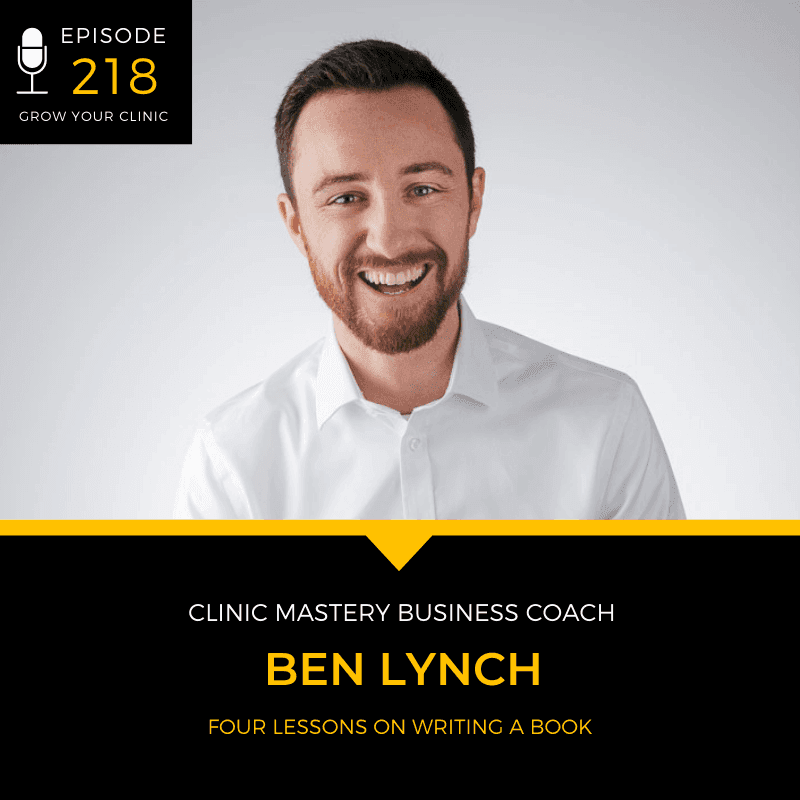
Ben Lynch: Let it be known that I would work with my wife. She doesn't want to work with me. Let it be known. And can we blame her? No, not at all. Not at all.
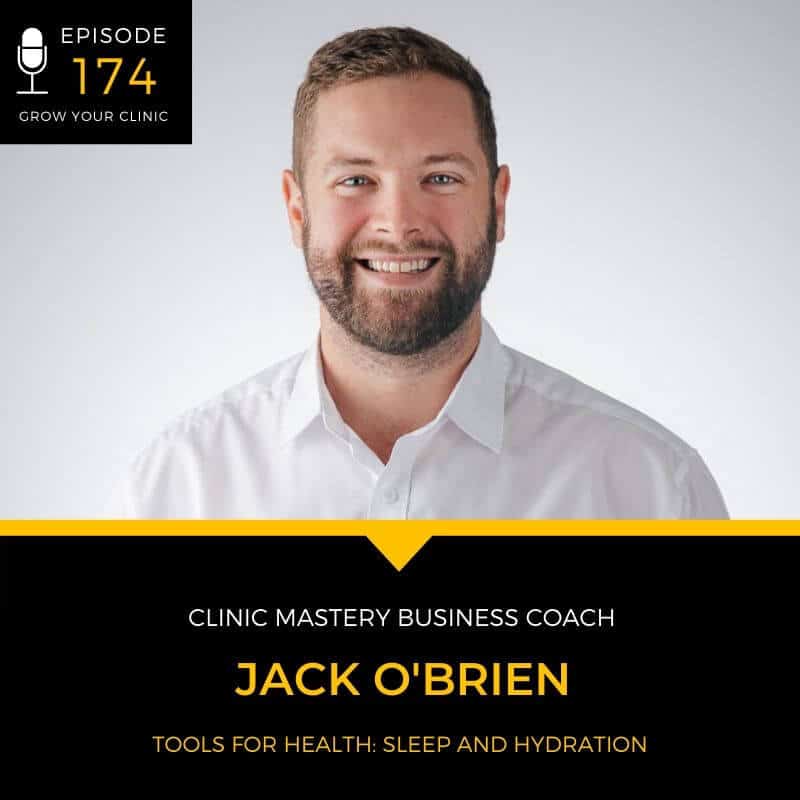
Jack O'Brien: No, Daniel's your work wife. You don't have room for two work women.
Ben Lynch: That is true. That is true. G'day, good people. Welcome to the Grow Your Clinic Podcast by Clinic Mastery. Here's what's coming up inside of this episode. What's one non-negotiable you'd insist on for any couple in their working relationship?
Bec Clare: You can sort of feel it in your relationship where you're like, oh my gosh, we're starting to really slide into the we're just workmates.
Ben Lynch: I'd imagine there's a fair few folks that are hiding a reasonably large ATO bill from their partner or equivalent.
Jack O'Brien: Things get healthy in the light, things grow winged in the shadows.
Ben Lynch: It's cheaper to have your spouse in the business. Disagree. Because we're a couple, we could talk about the business all the time. Nothing says romance like discussing business on your date night, hey?
Jack O'Brien: I love it when you pull up that spreadsheet for me. Brings a whole new meaning to diving into the sheets, doesn't it?
Ben Lynch: This episode will be right up your Allie if you're looking to work with your spouse in the clinic. We're diving into what does it take to make your relationship and business work together. And trust me, you'll want to hear us talk about, are you better off with position descriptions and KPIs from the start? Mistakes Beck and Jack made in making date night, a business meeting, and so much more. Before we dive in, today's episode is brought to you by AllieClinics.com. If you're the kind of clinic owner who loves to feel organized and stay ahead of the chaos, you'll love Allie. Think of it as your digital clone. It's the single source of truth for all your clinic's policies, systems, and training. Test it for free at AllieClinics.com. And in other news, applications are now open to work with us one-on-one at Clinic Mastery. If you want support to grow your clinic and bring your vision to life, just email helloatclinicmastery.com with the subject line podcast, and we'll line up a time to chat. All right, let's get into the episode. Well, it's good to have you back, Jack. My name is Ben Lynch. I've got Beck Claire here on the line as well. Today, we're going to be talking about something that is very close to home, quite literally for the both of you. And that is working with your spouse, your husband, your wife, your partner, whoever it might be. And I was telling my wife, Maddie, that this was going to be the topic of this episode. And she said to me, there's no way I would ever work with you, Ben. So I'm looking forward to hearing how you guys go with this because there's not a chance that I'll experience this. So it's often the case that many clinic owners we would see, they start to get a little bit busy and perhaps something happens in the clinic. I think typically it's reception or admin or operations related. where maybe there's a vacancy, someone leaves the team, or they're growing, they haven't quite hired yet, and maybe your partner is able to just step in and help out, perhaps temporarily, and then all of a sudden it becomes permanent and they're part of the furniture. Maybe they love that and they continue to thrive with it. Maybe there's a point where they get to some level of resentment or, I want to break out, go back to a former career. Or perhaps the business has been going so well that the partner with a career goes, actually, I'm going to come in and help out the business. There's a variety of ways to get there. And I'm interested to unpack in each of your own journeys, how it evolved for you in your households. But perhaps let's go to the things that maybe weren't so glossy. We want to talk about what's worked, what you've set up to make it work. But I'm interested to know, what did you perhaps delay, overlook, or leave out longer than it should have been? And it made it perhaps a little bit harder to work together than it otherwise would have been if you'd followed perhaps a normal process with a team member. Jack, you've worked with your wife previously in the clinic. Tell us a little bit about, yeah, maybe something that made it trickier to work together than it perhaps otherwise could have been and what the lesson was from that. Yeah, it's an interesting question.
Jack O'Brien: I think when I think about our journey, my biggest lesson is that Christina was quite a silent partner. She didn't have an active role in the clinic, but yet we own things together. We make decisions together. And so my learning would probably be that the gap or the cadence for checking in on decisions was too big. And so it might be that at the end of the month, I might say, oh, by the way, we did this, this and this that month. And she'd go, oh, really? I wish I had known about that. I wish you had kept me in the loop. So shortening the cadence of the alignment or check-in should be probably a key lesson. And not that she would have changed the decisions or necessarily had anything to add, but it just meant that we could be in agreement and in agreement sooner. Now, Christina's got a wonderful gift of discernment and the ability to see things perhaps differently than I, so being on the same cadence check-in more frequently meant she could add her two cents where necessary, which protected me in a lot of ways, but also just meant at home on the weekends and we were away travelling or having holidays with family that we were on the same page and in agreement more frequently.
Ben Lynch: Bec, you're nodding your head, maybe a similar experience. What about for you and for Grant? What do you feel that maybe you delayed or overlooked in terms of perhaps having some structure that made it a bit trickier at a certain point?
Bec Clare: I think it's probably the opposite of Jack in that we actually spoke too frequently. about work and didn't actually have the mechanism for structure. So we just took for granted that because we're a couple in the business, we could talk about the business all the time. Um, and so it just became all consuming, right? So we didn't have these regular check-ins as such. It was just that whenever we got a moment, we would talk about it. And so we almost got to a point where there were no ex outside hobbies. There was nothing else that we spoke about. And I think we, We sort of looked at ourselves and went, oh, we've become that really boring couple that only talks about work. And also we only talk about work with our friends now as well. That was the real check-in point where we're like, oh, what else has been happening in your life? And we sat there and we were like, Um, work.
Jack O'Brien: You mean you have other things in your life? Yeah. Because there's probably two different but similar expressions here where you and Grant are kind of actively working as employees in the day-to-day operations in the business. In my case, I was and Christina wasn't. And so those two variations of relationship setups, um, yeah, necessitate different types of structures and conversations.
Ben Lynch: Totally. Nothing says romance like discussing business on your date night, hey?
Jack O'Brien: I love it when you pull up that spreadsheet for me. It brings a whole new meaning to diving into the sheets, doesn't it?
Ben Lynch: Yes, it does. Well quoted around the traps. That's really interesting to have such a different experience back in. I've heard that a lot from folks that do work together. It becomes your entire life. That's all you talk about. And then they go, oh, hold on a minute. Yeah, we're not doing much outside. And perhaps that's okay. Perhaps that's also required for the season that you're in. I'm interested to know then, what changed for you, Beck? You're obviously aware of it now. Did it change? Or you said, no, that's what it is. Or did you make a purposeful change to look at the structure, the formality? Yeah. What happened?
Bec Clare: I think one thing that really triggered change for us was Jack, you had said, okay, so I think you were coaching us at the time and you said, okay, so you've just come off of a holiday. When's your next one booked? You're like, you need to be booking that next one while you're on the current one so you can be savouring the moment. And that really stuck with us to actually be carving out our family time away from the business. And now we're actively taking at least four to six weeks away off the airwaves, just doing family stuff. And we're now booking that next one so we can savour that moment and not be like, oh, we've got to hold on to this moment so hard because we're going to go back into the season of work. And Ben, as you say, it is seasonal. You know, we've just opened a new clinic. We had to go hard. Like that is all we talked about for quite some time leading up to the clinic because we just knew that that was the season we're in. But we had a holiday booked and we took it and we knew that we were going to get that time to reflect as a couple and come up for air and talk about something else.
Ben Lynch: Is there anything practical that either of you found useful in actually going, oh no, we are on date night and all of a sudden we started talking about the admin roster or the hire of the new practitioner or the new location. You go, oh, I need to pull myself out of this or you're going for coffee or going for a walk. How have you consciously made those changes so that it doesn't overwhelm the non-business time? Jack, how did you navigate it? It sounded like it was maybe a more organic exchange that you had. It didn't have perhaps this sort of structure.
Jack O'Brien: Well, I mean, to Beck's point, there are times or maybe it was both of you. There are times when clinic ownership is all-consuming and there's times when there's a bit more breathing space. But also, you know, to your point, Ben, we can have these rules, but if they're somebody else's rules or other people's expectations, they're just, they're rules for rules sake. So, for us, it was less about, oh, when we're on date night, we can't talk about work. It was just a case of, I'm thinking about talking about this. Is it okay if we talk about work? Is that all right with you? It's that cliche, right? If you love what you do, you never work a day in your life. If you genuinely love some of the challenges and the opportunities that clinic ownership brings, then talk about it. You don't have to put it aside if you don't want to. For us, it was really about alignment and agreement. Is it okay that we talk about this or would you prefer not to? If you need some space to change hats and change headspace, that's totally fine. Agreement was the
Ben Lynch: That's an interesting point. Were you explicitly and consciously having those conversations about how we're working together? Because I hear a lot of folks that maybe develop some degree of resentment or drift or divergence and they're like, oh, it feels hard perhaps to have these conversations with your life partner and business partner. navigating the tension of they're also playing this role as like an employee on the company. So if I'm hearing you correct, you were pretty intentional about calling those things out almost from a meta perspective and observing them and saying, hey, this is how we're going to set our own version of rules. Is that right, Jack?
Jack O'Brien: Definitely. I'm curious, Beck, on your experience. But for us, we talk about this often. If you don't manage your marriage, you'll manage a marriage crisis. If you don't manage your health, you'll manage a health crisis. We flippantly talk about some of the statistics, right? 55% of marriages end in divorce, a higher percentage of business marriages, i.e. business partnerships, end up in separation. We don't want to become a statistic, so how do we proactively ensure that we are on the same page and we don't let maybe work disagreements impact our personal relationship and we don't let personal conflicts bleed across into work. The kids at work don't want to see the parents fighting, so to speak. So we were super proactive in buffering against those so that we didn't become another statistic.
Ben Lynch: So Becky, you're the systems whiz. What have you set up? System structures, whether it's meetings, position descriptions, I'm interested in this. What have you found that has allowed it to flourish for you both? And also knowing that there are challenges, I don't want to paint a rosy picture that you don't have disagreements. I'm sure you do. You can speak to that. But what are some of the things you've found installing so that You've worked better together over time. It's improved. What are the things you've done?
Bec Clare: I think when Grant and I first came together from a business perspective, it was really challenging because we have such different styles. Ben, as you say, I'm the systems person. Grant is more the, I'll say the people person or the who person bringing people together. And so we usually use the joke of the dishwasher and our team know that joke, that I'm the person who stacks the dishwasher because I can put all the plates together, you know, in a beautiful formation that everything gets cleaned. Whereas Grant just chucks it all in hopes for the best and ends up doing the dishes twice. It just drives me. We just, we know where our strengths lie now and we use the dishwasher joke in the clinic because it actually came from doing some personality testing where we actually started to understand how, where we should be in the business and how we can help each other thrive because there were actions that were on our 120 day plan or our 12 month plan that were very systems focused and Grant was doing them and I would come to meetings and be really frustrated that it hadn't moved. And then he would be like, oh, so where are we at with this referrer partner? And he would be frustrated that it hadn't moved. And so we just had to get better on aligning and playing to each other's strengths. And it's far more harmonious now. You'd still say that there are times where I get too details-focused and he still is not details-focused enough for me, but that's where we then have that really nice understanding. There'll be times where we'll have disagreements in the clinic, not like huge massive blow-ups or anything like that, but the team kind of find it quite funny because we do it in a really respectful and sort of playful way and they go, oh, like domestic, like this. And they also know that we're just in jest. They actually like seeing, our team have said they actually like seeing the fact that we don't just agree on everything because otherwise you get that like agreement bias where you're just all one directional. And it can be really hard for team members where they feel like a married couple is running the business and there is no point of differentiation, I guess. And so coming to structure, it was putting meetings in place and actually saying to one another over date night, we'd love to talk about the business. We love what we do. And we're really passionate about it. And we love the impact that we can have for our community, for our team members' lives. But one question we ask is, is this something that is either fun to talk about? Or can we affect change right now? So if we're on date night and something's a bit gritty, can we make change on it now? Can we decide on something about it? If we can't, park it to Monday. That belongs in that meeting over there and we'll solve it then. We want to talk about things on date night that they're sometimes tricky conversations, but is there a solution to it that we can then use it to move on?
Ben Lynch: So Beck, I'm sure you've worked through this over time. I'm interested in your experience, but we know a lot of clinic owners in this position. They're working with their spouse, their partner, the husband, the wife, whoever it might be. And the notion of who's the ultimate decision maker? can come up and potentially there's friction there around, I've given you my two cents and you're not taking my advice and you're making these decisions. How have you navigated clarifying where the decision is? Obviously alignment is super important that you both are aligned more often than not, but I'm sure there are disagreements like I see it this way, you see it this way. How have you navigated over time being clear on, okay, who's making the final call on this thing?
Bec Clare: Well, other than happy wife, happy life. Grant will probably agree to that sentiment slightly.
Ben Lynch: And knowing Grant, he's the people person, the geese goose, as you said. That's a funny line. I saw a comedian once being like, do you reckon like the geese say, yeah, I'm a geese goose. Anyway, when we say people person. Back to this point of like, Grant is always like, I want connection. Yeah. I want, you know, people to be on the same page. Typical of a supporter profile. Absolutely. So that's, that's quite interesting not to upset the apple cart. But yeah, just labour on that a little bit more, maybe even to some of the discussions that you've had to get clarity on, yeah, who's making these calls.
Bec Clare: What we've come to is formalising actually our position description so that we've got a really clear idea as to who is responsible for making what decisions. And then empowering the other person to go about doing that. And as a couple, it then becomes challenging to be like, okay, well, that's a decision that's in your wheelhouse, but I don't necessarily agree. Come back to the process and the system that was in your wheelhouse, as long as it was made in line with our mission, vision, and values, I support that. It does take a degree of separation, I guess, from the emotion. In the end, we're work colleagues. We're partners in life, but we're also work colleagues. So if Grant wasn't in that position and say, Jack, it was you, how would I have dealt with the fact that you made that call? We're just wanting to try and remove some of that high emotive response to these decisions being made. Having clear goals and then having a business coach or someone that you can go to to workshop these, less so as a marriage counsellor, but sometimes they become that too. Sorry, Jack. And then, for that matter.
Ben Lynch: The soundboard is really valuable.
Jack O'Brien: Well, to that point, I like what you said there, Bec. We should hold ourselves and each other to the same standards that we hold other team members, particularly if we're doing it in an executive function, that there are high standards and high expectations that you should have of yourself and it's okay to have of one another and we can talk about that candidly. build trust, be able to have robust conflicts and ultimately commit to accountability and results as per Lencioni stuff. We need to be able to do that when we work with our life partner as a business colleague.
Ben Lynch: There's this tension I can see that perhaps, and depending on your relationship, your personal relationship, it can become quite black and white, quite transactional. Like you're saying, Beck, we add a lot of system and structure and rigor around this, but our relationship is really quite different to the one that we have with our team members. So have you ever gone too far on that end and added too much structure and gone, actually, we need to be a bit more dynamic or flexible with this?
Bec Clare: For sure. I think you can sort of feel it in your relationship where you're like, oh my gosh, we're starting to really slide into the, we're just workmates. And so doing the things like adding back in the date night, just doing the couple things, like whether it be take your lunch break together and go for a walk. You may not do that with a colleague. Just thread in those bits of you as a couple. In saying that, I think it's also… Before coming on to this session today, I was having a chat over lunch with a couple of teammates and I said, I'm going on this podcast, we're talking about married couples working in a business. What's it like working for a married couple? And they were like, oh, how do we answer this? And what they actually said is that we know that you guys are a couple and that's actually really nice because in some ways when we speak to Beck about something, we know that Grant's going to know about it and find out about it. And we know that we've got this collective wraparound. And at the same time, what they said is what we really like is that you both own your own space. in the business, that you have set up your careers as two individual people who happen to be married, who enjoy your life outside of work, but we take you both seriously. And I think positioning that as well with the team around some of the systems and position descriptions is important that, you know, if it's the husband or the wife who's coming in as the second person in the business, that they have been put in that role because they are going to thrive and they can own it versus it's by default. That, I think, is also where the resentment can come to is feeling like, oh, well, I've just been given this role because it was there and it should be held by someone else.
Ben Lynch: It's a good point about having that sort of plan, like perhaps to replace them and replace the role or change their role. Maybe they're happy to work in the business, but they don't want to work in this specific role and they're open to working in another fashion. It's interesting, J.R.B., I've just been thinking about your setup and I remember working for someone. And we would predominantly see one of the partners, but not the other. And there was this kind of shadow decision maker that sat behind the scenes that just within the team created this I don't know, distrust or like, there was just this lack of transparency, you know, in the sort of dysfunctions of a team. It was like, there's someone here making calls, but we don't ever see them and they perhaps don't understand what's going on on the ground floor. How did you manage that? Because I'm sure this is true for a lot of folks out there, that there is a decision maker, there is someone behind the scenes that is contributing. but perhaps they're not as present. So how do you get the trust of the rest of the team? What did you find useful in that?
Jack O'Brien: Yeah, it's super poignant. We had our first child a couple of months before we led the clinic, took ownership of the clinic. And so, yeah, they didn't see Christina for a long time. We basically haven't stopped having babies since then. And you're still going, right? There's still more seats in that gear carnival. They'll have a different biology if we add more seats, but anyway. So we made a really deliberate effort to include Christina in the social things. She wasn't at the professional development and all those things, but certainly at the social, cultural gatherings should be a key part of it. So people felt connected relationally. even though she wasn't involved operationally. I thought that was really key in hindsight upon reflection because it meant that people trusted her and knew that there was some involvement going on there and she wasn't just this shadow ghost operative but that there's a real human involved here and it added a little bit of humanity to what I can be perceived perhaps at times as a bit robotic or clinical, pun not intended. Just at times?
Ben Lynch: Well, it's a personality trait.
Jack O'Brien: So yes, it added a bit of humanity to that. So including your partner in and including others' partners as well. That's not just Christina. We would include all of our therapist's partners where possible and our admin team including their partners. It's such a key to include families in my humble opinion in many ways to be right. It adds a level of humanity when things get tense. you can fall back and rely on some of those human contributions.
Ben Lynch: I thought you were going to say you can blame your partner, but we won't go there because that could fracture things. I think, you know, with using tools like Loom or Zoom or, you know, Google Chat or Slack, if they're also interacting at different frequencies and showing their face in different ways and contributing, I think that could also help case-specific like If they're maybe physically somewhere else and your clinic's based in a different city or state and geographically, physically it's hard to get there, that might be true for some folks. So being able to do it digitally, what's the connection piece there? Well, you're right.
Jack O'Brien: you know, if it's not just the cultural stuff, it is being present on Slack and, you know, jumping in the threads when there's a moment of celebration or a win, or even just hitting the React emojis. At times it is adding a loom or a screen share video in, but it's presencing yourself in a contextually appropriate way. Super helpful for the team, I think, to understand which of the humans that they're connecting with.
Ben Lynch: It's an interesting point that you raised there because what it provoked for me was this notion of like helping and supporting, as you said, like jump into a thread and help out perhaps, but maybe just take it as like supporting or helping. Perhaps some of the resentment on a team front is, I'll use this sort of image of the shadow decision maker, only ever asking for new standards of everyone else. but not being seen to help, if that makes sense. And, you know, practically, maybe they don't have a functional day-to-day role. And maybe you could say, well, you know, that's probably true for a manager. They oversee a location or a team. Maybe it's quite a big clinic. And we don't ever interface with them, but we always have to listen to the decisions that have been made. But perhaps they're more present. They're seen to be helping out maybe through a slack. So probably that's the distinction that I've just got from there is if you've got someone that's contributing to, well, this is the new policy, this is the new system, but we never hear from this person, but we know they're contributing to it and driving that change. I think it can kind of be like, hey, we're on the ground floor here doing the work, but we're just getting orders given to us. I've got a couple of quick-fire questions for the both of you. The first one is, what's one non-negotiable you'd insist on for any couple to have in their working relationship?
Bec Clare: A sounding board? A coach?
Ben Lynch: Okay, an independent third-party sounding board. I like it. J.B., what about you? If you could pick one.
Jack O'Brien: Yeah, I had that written in my notes off to the side back to talk more about having a referee, a coach, whatever the case is. But I would say same page sync ups. So having a frequent sync up.
Ben Lynch: Okay, I like it. I've got a couple of different ones. So we're going to go with yes, no. Remember, I've made a mockery of this before. So I'm going to just take it slow. Yes, no. Should your spouse partner have a defined role from day one? You could think of this specifically as a written position description.
Bec Clare: Yes.
Jack O'Brien: Yes, if they're active. Okay.
Ben Lynch: Second question, should they have KPIs, key performance indicators, you know, outcomes or results that they are measured by? Yes. Tell us what you really think.
Bec Clare: Yes. Again, with context, it really does depend on the role and how active they are in the business. Doesn't it?
Ben Lynch: Very interesting.
Bec Clare: Would you have put the KPIs on Christina, Jack, in terms of her role?
Ben Lynch: Good question. Did you? Did you is a better one. Did you? Tell us what you actually did.
Jack O'Brien: Yes, to answer your question explicitly and if there is a position description, a position description is incomplete without KPIs irrespective of whether you're related to them or not. Positions have performance expectations.
Ben Lynch: What was Christina's KPI? Do you recall?
Jack O'Brien: Financial control, so budget performance. Outstanding accounts. outstanding accounts, getting some of our spending. I remember one of her projects was going green. It was a project paperless and she cancelled the ink order and getting rid of the scanners and all of that stuff. She just deleted all the pens and the admin team were like, where are the pens? You don't need them because we're paperless.
Ben Lynch: That's good. All right. Yes, no. Should one partner have the final say in business decisions?
Bec Clare: No.
Ben Lynch: Yes. Okay, it has to be shared.
Bec Clare: Ooh, Jack. You don't have to agree, you just have to share it.
Jack O'Brien: I would say opposite to that. I would say that no, it shouldn't be shared. Not that it shouldn't be shared, but that in a I'm going opposite to you here, Bec. There's many ways to be right, of course. I was actually going to come back to what you mentioned about happy wife, happy life. Sorry, Ben. We're wrecking your whole thing here. But, roll with me.
Ben Lynch: You're the one that constantly says don't sit on the fence and here you are just perching yourself up on the fence.
Jack O'Brien: I'm not sitting on the fence at all. Someone should have the final say. In a team context, there's always a captain who has to toss the coin. So, that would be, you know, a decision rests with a person.
Ben Lynch: Great cricketing reference. All right, we're going to go on to agree or disagree. First, Beck, it's cheaper to have your spouse in the business. Disagree.
Bec Clare: Sorry, Grant.
Ben Lynch: You can look at this quite practically well. They own half the business and so it's not as an example, but just assume that they're coming in, they're replacing a role or taking a role. It's cheaper to have your spouse in the business. You're saying no. I do want a quick little note of context. Why is that? They slow things down.
Bec Clare: Yeah, if perhaps they're not right for the role, they're going to cost the business more money in terms of efficiency and team dynamics. And if they are right for the role, then you should remunerate them as such and have them own the role.
Ben Lynch: Well, because I think a lot of people will do that. They won't pay the market rate. Maybe they don't pay them at all because it's just like owner dividends or distributions. And so they're like, they see it as, quote, cheaper. Well, it's cheaper to have, you know, my partner do the thing than somebody else. Sorry, Bec.
Bec Clare: If you're perhaps not great at work, like some married couples just cannot work together. Ben, Maddie said, no, we've got four children. Absolutely. We're not working together.
Ben Lynch: Let it be known on the record, Bec. Let it be known that I would work with my wife. She doesn't want to work with me. Let it be known. And can we blame her? No, not at all.
Jack O'Brien: No, Daniel's your work wife. You don't have room for two work wives.
Ben Lynch: That is true. That is true. Trust makes up for lack of experience. This dovetails nicely into yours, Beck. The trust that you have with them, perhaps the ability to have some of these deeper, trickier conversations. You can just say, hey, I need you to just answer the phones or do this. Maybe you wouldn't speak like that. You can move a bit quicker potentially, though Beck says no. Trust makes up for a lack of experience. Agree or disagree, Bec?
Bec Clare: I need a fence, Ben. No, you've got to commit. I'm going to go, I disagree. Agree. I've also worked with my sister too, on two occasions. The first one was a raging success and then failed dismally. And then she came back for a second bite at the cherry and we're so much better for it. But yeah, trust. I can have a conversation, whether it's your spouse or your sister, someone that you're close with, I can just blurt to her, right? And she can get it in a way that I don't need to distil it perfectly. And I trust that she's got it.
Ben Lynch: Jack, you look like you agree. Trust makes up for lack of experience. Agree or disagree?
Jack O'Brien: I agree, though I understand and I can sympathize with those who might find it challenging. I'm with Beck. Where there's trust, you can have direct, candid conversations and things can move faster, both from a spouse or life partner context. I've employed Yeah, various family members, you know, close and distant family and it has worked really, really well. But I can respect and appreciate that that might be challenging for others, particularly family context gets very complex at times. So it can work and I agree with the trust overcomes experience, my experience.
Ben Lynch: Very good point. In a similar way to like connect this, can you really flourish? if both partners are not on a personal growth journey. Let's say there's typically one that's driving the business, maybe they're the therapist typically and started it, that would be a typical narrative. And then the other partner who may or may not be a therapist comes in, fulfils a role, maybe it is temporary and then builds up. This is maybe similar to you, Beck, so you can correct me here. And let's say one is really driving it, they've got some good goals, maybe they've got a coach, they're reading the books, they're listening to podcasts. The other person, not so interested, happy to help. Happy to play a role, but I'm not going to go down that line of the personal and professional development for whatever reason, not my massive interest. So do you think that it is sustainable? Can it be sustainable if one is on the growth journey and the other is not?
Bec Clare: Well, this is probably our personal story, really, in that I came to become aware of Clinic Mastery and Grant was a massive skeptic. I didn't feel like we needed coaching.
Jack O'Brien: Is he a physio by any chance?
Bec Clare: Yeah, right? You know physios.
Jack O'Brien: They're skeptics, aren't they? I'm one, admit I'm a skeptic.
Bec Clare: Exactly, that's why I can say he's a physio. But it was a matter of I trusted and I knew that inherent in our relationship would be that we would come to a really nice aligned point. And I think that's what you've got to come back to. How do you function in your relationship? And if you have disagreements outside of your business, how do you solve them and how do you resolve them? Ultimately, if you're on a growth pathway, you want to be doing that together. But sometimes it's going to take your partner a little bit longer to maybe cotton onto that and to see some success. And I'd say I had to be at times gentle with Grant in that. I couldn't just be like, here's all these books, you have to go and read them now. I just sort of take him on that pathway a little bit. And there's other times where I've been like, look, you just, you're going to need to get on the bus, my friend.
Ben Lynch: Interesting comes back to that trust and maybe experience side of things. Maybe someone with more experience moves a bit quicker, already has some of those, you know, bias or learnings or inclinations to learn and grow.
Jack O'Brien: I want to publicly acknowledge you. I've been privy obviously on the inside, but you've done a super job of navigating that. There's such vast different life experiences, clinical experiences or non-experience in your case, but you've got that legal background. So you've navigated that so beautifully, so publicly. Kudos.
Ben Lynch: Yes, absolutely, and continue to do so. Okay, so I got an answer from you, didn't I, Jack?
Jack O'Brien: You didn't get an answer from me.
Ben Lynch: Well, feel welcome to answer.
Jack O'Brien: If they're on different growth journeys, I would say that is untenable, but, not but, it's untenable and it's okay if your clinical professional culture and values differs from your family culture and values. If the clinic business context is growth and advancement and we're on this train but yet as a family maybe we're slowing down, we're being a little bit more deliberate and so it's okay if they're different cultures. And so therefore it's really important that we wear the right hats when we're in those different environments and that we can select or deselect as it were in a way that is aligned with the culture and values of those different domains.
Ben Lynch: Nice nuance. Actually, you know, I said no context, but I think it's actually a nice thing. I was trying to work through it, but I reckon we might keep the context pace. Context is my love language. It could be yours too, Ben. I know, I know. Hopefully you've been receiving the flowers, you know, equivalent of context that I've been sending you. Anyway, last one. Most couples wait too long to professionalize or structure the agreement arrangement in their role. I know we spoke a little bit about KPIs and position descriptions just before. Just broadly, they wait too long. to add the structure to how they work together. Beck? Jack go first?
Jack O'Brien: Yeah, Jack will go first. Yes, I agree. They wait too long. Better that we are proactive than reactive and so we don't want to wait till we have to, we want to do it because we are thinking ahead. Yes.
Bec Clare: for sure, I 100% agree in that case. Jack, you spoke before about managing your marriage versus managing the crisis. If we wait too long to put the structure in place, we're then trying to repair something that is already got some cracks and some fractures in it. Put in place the structure and then allows all of you to thrive, really.
Ben Lynch: Joby, you love getting in the sheets, the spreadsheets, the financial control. You love looking through that. And you had a couple of notes that you said you wanted to talk about when it comes to this. Finance is such a sensitive topic for everyone. And especially once you start mixing family and business together, it can get a little trickier. So what are some of the notable points you have around money?
Jack O'Brien: So, there's probably a couple of elements here. I'd say number one, make sure your business finances are segregated really well and you run your business like a business. If anyone was to peek behind the curtain, you want to be above reproach, you want to be able to explain everything. We're not doing anything dodgy or shadows. Just because you can get creative doesn't mean you should get creative. Good management principles still apply, number one. Number two, be proactively transparent. Share any conflicts of interest or any areas of doubt or uncertainty, particularly with your partner. Be open. If you've stuffed up, own it. If you've missed a bill and there's a debt, don't hide. Bring it out into the open because 99 times out of 100, your partner is going to be there to support you both professionally and personally and you can solve things together. Don't hide things from one another.
Ben Lynch: Can I just double click on that one for a moment? I'd imagine there's a fair few folks that are hiding a reasonably large ATO bill. Probably. From their partner or equivalent. Because it's kind of scary and we've seen some pretty confronting outcomes for clinic owners that haven't realized they've racked up different bills essentially the need to be paid. So, yeah, just sort of call that out specifically. Have you found a way to do that, J.O.B.? Obviously, you're saying, hey, bring it to the surface. You might be sleeping outdoors for a while. So, how do you do it? Yeah. Maybe this is part of having the independent person like the accountant or the coach. Maybe it's about the structure or the rhythm of the frequency that you meet, but just talk us through how you would actually practically do that.
Jack O'Brien: Yeah, I realize it's quite a sensitive topic probably for a lot of listeners and so this would be somewhat generalized. There's always personal contact and that's what our coaching inevitably tends towards over time. It's less about the little tactics and more about let's solve these bigger problems. But I would say to that clinic owner, if you've been selective with the truth, let's say, it's not lying but perhaps a little bit deceptive at times and it's snowballed and you need to do something about it. There's a variety of different ways that you might approach that, but what I would say is arrange a time and make sure we pre-frame and set the context of the conversation up. It's like, hey, we're going to need to have a bit of a challenging conversation. I'm really uncomfortable about it and I'm responsible for a few things. I'm going to share some information that I'm going to need you to be gentle and gracious with me. And that's not to shirk from accountability, but to say, hey, we're in this together, come hell or high water till death do us part. And so we've got a problem that I've created that we need to solve together. Is it okay if we navigate that and just own it? That's not to say that that won't be hard and you can't control reactions, etc. Have a plan of how you would, it's okay to bring a problem, but bring… Yeah, that's a great one-three-one rule, bring three possible solutions and what you think we need to do. But things get healthy in the light, things grow weird in the shadows. So better to bring it to the light as soon as comfortable.
Ben Lynch: Yes. Great point, Joby. That is tricky.
Bec Clare: Things I'd add is the environment matters as well, where you have that conversation. If you've got maybe a young family and you're trying to have that conversation, a tricky one about money and the kids, maybe your partner is worried about the kids getting settled for bed or they need a bath time or they're really tired, pick your moment too because if it's going to be challenging, you want both of you at your best at the table to have that conversation. I'd also say make talking about numbers normal. That took us a little bit of time to really find that space where we could throw the numbers around and we could both be as quick in understanding it as each other because sometimes we, as business owners, we might talk about the numbers or see the numbers all the time and throw around language like PVA and lifetime value and all these other little acronyms that we see every day. But if you've got maybe a shadow partner or your spouse who may not be in the business and you're starting to throw these numbers around really quickly, they might need some time to catch up. But making the numbers really normal. And Jack, after you go next, I want to speak to some of the structures where you can protect family and separate businesses.
Ben Lynch: It's a good point you raised, Bec. Even some of that sort of financial literacy is going to be different between two people anyway. Actually being able to understand that's going to be super important because I've definitely seen a lot of clinic owners that their partner may or may not be inside the business, but they're definitely questioning a lot of, is it worth it? Why are you doing this? Why are you working so hard? Are you spending money on these things? Should you be? So, I think it's really useful even if they're not involved in the day-to-day operations of the business that they're aware of that. Ideally, your accountant can help with that. We can definitely help with that in bringing you on the same page with your spouse about the finances, such a key point. Joby, your third point that you had about finances, go for it.
Jack O'Brien: Yeah, I love your comment there around getting familiar with talking about numbers, particularly when they're red, not black. Learn to talk about numbers when they're not good is a practical skill. I'd say thirdly, and this comes from a great mentor of mine, Ash, he said, when there's one person in control, Team members might be tempted to shirk numbers or to hide money or to deceive but when employees know that particularly the wife is taking care of the money, people won't do the wrong thing by the business owner's wife in that case. So having that shared financial oversight protects you against any potentially nefarious activity from your team members.
Ben Lynch: Okay. There you go, J.O.B. Well, I'm interested to know, oh, Bec, you had a point. Sorry to come back to.
Bec Clare: Well, to come to protection, I think making sure you've got some experts who are in the room with you who can also help separate your business finance and your home financials as well. And whether that's talking to someone about one of you being the liability person and the other being the assets person and how you just protect even just your home so that if something was not to go quite so well and you've got a really large ATO debt, you've got space and security and I think that's for like, we go to bed every night knowing that no matter what happens, we'll always have our home. There's nothing that can take that.
Jack O'Brien: So you go to prison but you'll be okay back.
Bec Clare: Correct. That's right. Audrey just needs someone to load the dishwasher.
Ben Lynch: She doesn't need that, right? That's great.
Bec Clare: But you know, having someone who can help you with that structure, um, just provides you with that ability to sleep better at night and like, you never want to have to rely on those systems, but have them in place.
Jack O'Brien: Yeah, I really like that and it's helpful to have a third party in the room sometimes because finances and feelings can get a little bit blendy and it's helpful to separate facts from feelings, to have a third party to add some context. Sometimes when it's maybe a bit tense or adversarial, you end up feeling like you're defending yourself or maybe there's context from the blow up over the breakfast table and so having a third party in the room to add some objective context is so worth it. That's the cheapest third business partner you'll ever have.
Ben Lynch: Absolutely. How many sessions have we done with members where their spouses joined and if they're actively involved in the business, they're regularly on the sessions anyway? But so often we've had sessions where it's like, yeah, invite them in. We'll schedule a time where we'll go through this together so that we're on the same page. They can ask questions of me and we can workshop a plan. I'm interested, you've obviously had quite a journey in evolution. What do you think is perhaps the main thing that you've changed your mind on? Perhaps the advice that you give to other couples in business together, but notably the thing that you've really grown on and changed your perspective about working together in business. Bec, what's that been for you?
Bec Clare: For us, it was that if we wanted to really succeed, we needed to find the best people out there to hold certain roles. And that even though Grant might be the real people person, I'm the real systems person, as we continue to grow, we wanted to have a little bit more freedom as well as part of the business. investing in having someone in operations meant that I could then also have a life outside of PhysioWest. What we came to as well was sitting down and doing our desire statement and understanding what each of us needed for all of the elements of our life in order to be happy and thriving. For me, that was that I came into the business And I love it and I continue to want to be here, but I also still wanted something else, which is why I'm here with the team at Clinic Mastery, because that really sets me alight in other ways that's still really connected to what I do, but it's almost like this is my career offshoot. So talking to one another about still owning our own career spaces, I guess, was the thing that really… Very interesting.
Ben Lynch: What I love is that, for me, it strips back the ego. It takes some humility. I often find myself wrestling with this as well in a number of different ways, which is, am I really the best person to be doing this thing in our business? What if someone else replaced me? I'm sure the continuum, the spectrum is quite large. I'm sure if there was someone from a Fortune 500 company that come in and took over some of the things I was doing, they'd be meaningfully better than I am. But in some vein of reality, it's like, what if I'm the bottleneck here, beyond maybe just implementing some systems and processes? So that's a huge thing. I love that lesson that you've got there. It also probably meets a number of your personal goals, the meaningful things on your desire statement as well, to free up some of that time. And why I think it's so significant is, I think a lot of couples would probably think, we've got to control this entity. Like, we will only be the decision makers here, kind of no one else could run it like we would. And it sounds like you're really stepping into that point of some version of, maybe there are other people who could fulfill this and do it better than I can. Wow, that's a really cool one, just definitely for me. I think it was Scott from MyoDetox, formerly, when we were having an episode and he said something along the lines of, I realized that my presence in a lot of meetings was actually counterproductive. And it was just one of those lines that really stuck with me of a leader realizing perhaps they're actually causing a bottleneck or not allowing other people to make progress and actually the business to perform better. J.O.B., what about you? What have you perhaps most significantly changed your mind on when it comes to working with your spouse? And perhaps that's led to advice you then give folks who are doing this or looking to do it.
Jack O'Brien: removing the myopic lens of like there's one way and everything else is wrong or this is right and this is wrong. There are many ways to be right and part B of that is that it's okay and probably natural that things evolve and change over time. It doesn't have to stay one way forever. Really helpful practice to put time commitments and review time commitments on It's like, all right, we're going to do it this way for the next six months or 12 months or two years. And then it's okay if it changes and it doesn't have to be that binary myopic thinking of he should do this or she should do that. It doesn't serve anyone.
Ben Lynch: Very nice. I think the keynotes for me are a lot about adding some structure, being intentional and deliberate about things. It's really clear is kind, the great Brene Brown quote, right? Is if we're clear, I think if it's not clear, that's where some challenges, tough conversations, potentially resentment can come from. So I really like hearing the stories that each of you have. This is something that a lot of clinic owners are navigating right now and will navigate into the future as well for various reasons so I think it can be one of the most incredible. Transformations for your business to have your life partner. Be in the business and contribute and what a shared goal but I also realize and have seen in ways very close to home that it can really be a point of incredible friction on a partnership on a marriage on a connection if some of these things are not done. Yes, it's sensitive and for those that are navigating those challenges at the moment, we feel for you and please reach out. Just email Jack at clinicmastery.com and Joby, I'm sure you'll feel very comfortable helping folks navigate that journey. By the way, you had a couple of notifications, a couple of announcements to cover. We just got straight into the business today.
Jack O'Brien: Yeah, we had a flurry of new clinic owners join our programs over the last couple of weeks. So, wanted to make sure we personally welcome them publicly. So, Sonia, welcome to Elevate. David, a physio, has joined us. Jasper has joined us as a physio as well. And Kate has graduated. So, our Elevate programs for those solo startups doing up to about 30 or 40k a month, Kate has graduated, grown her clinic, and she's now progressed up to the Business Academy as well. So kudos to those clinic owners and as Ben mentioned, if you're a clinic owner looking for some help to grow your clinic, looking for it done in a way that aligns with your values and understands your personal situation and context, we're not just here to tell you the brass tacks of how to do your business. We're here to understand you as a human and help you as a person I'm the one to contact. I'm the human. There ain't no AI in my inbox. You can find me jackatclinicmastery.com. That's jackatclinicmastery.com. Just put podcast in the subject and we'll have a conversation. I'd love to help.
Ben Lynch: Very nice indeed. Speaking of the podcast, you can head over to clinicmastery.com forward slash podcast to get this episode, the show notes, and many more. Go back and binge for those members that are listening in as a little bit of accountability between your sessions. Well done and thank you. We've got the Greer Clinic Summit coming up very soon. I'm very excited for that.
Jack O'Brien: a literal handful of tickets available for non-members. This is a members-only event, but I've personally got the discretion on a couple of non-members. So if that's you, you're like, I'm thinking about CM, I need to taste what this summit's all about, again, Jack at clinicmastery.com and you can apply, see if there's a fit.
Ben Lynch: I think two or three came through while you were away. And both of you are going to emcee the event, which I'm looking forward to as well. Very exciting. Well, that's it, folks, for this episode. We'll catch you on another episode very soon. J.O.B., Beck, thank you so much, as always, for your advice, your wisdom, your experience being shared. We'll see you next week. Bye.